World Cup Betting Markets Explained: Full Guide

Contents
- World Cup Betting Markets Explained: Full Guide
- What a “Betting Market” Actually Is
- Match Result Markets
- Goals Markets
- Player-Based Markets
- Tournament Outright Markets
- Group Stage Markets
- Handicap Betting
- In-Play Betting
- Special Markets
- Understanding FIFA World Cup Betting Odds
- Pros & Cons of Betting on Multiple World Cup Markets
- Where to Start Based on Experience
- Common Mistakes Worth Avoiding
- What Changes in 2026
- Final Thoughts
- Frequently Asked Questions
 Best Bookmakers for United States





KEY TAKEAWAYS:
- Know what you’re betting on. The market matters as much as the picking — backing the right outcome in the wrong market is still a losing bet.
- Value lives in the details. Squad rotation, motivation, and group-stage dynamics shift FIFA World Cup betting odds in ways casual bettors often miss.
- Start simple, expand gradually. Match results and over/under goals are enough to begin with — complexity only helps once the basics are solid.
What a “Betting Market” Actually Is
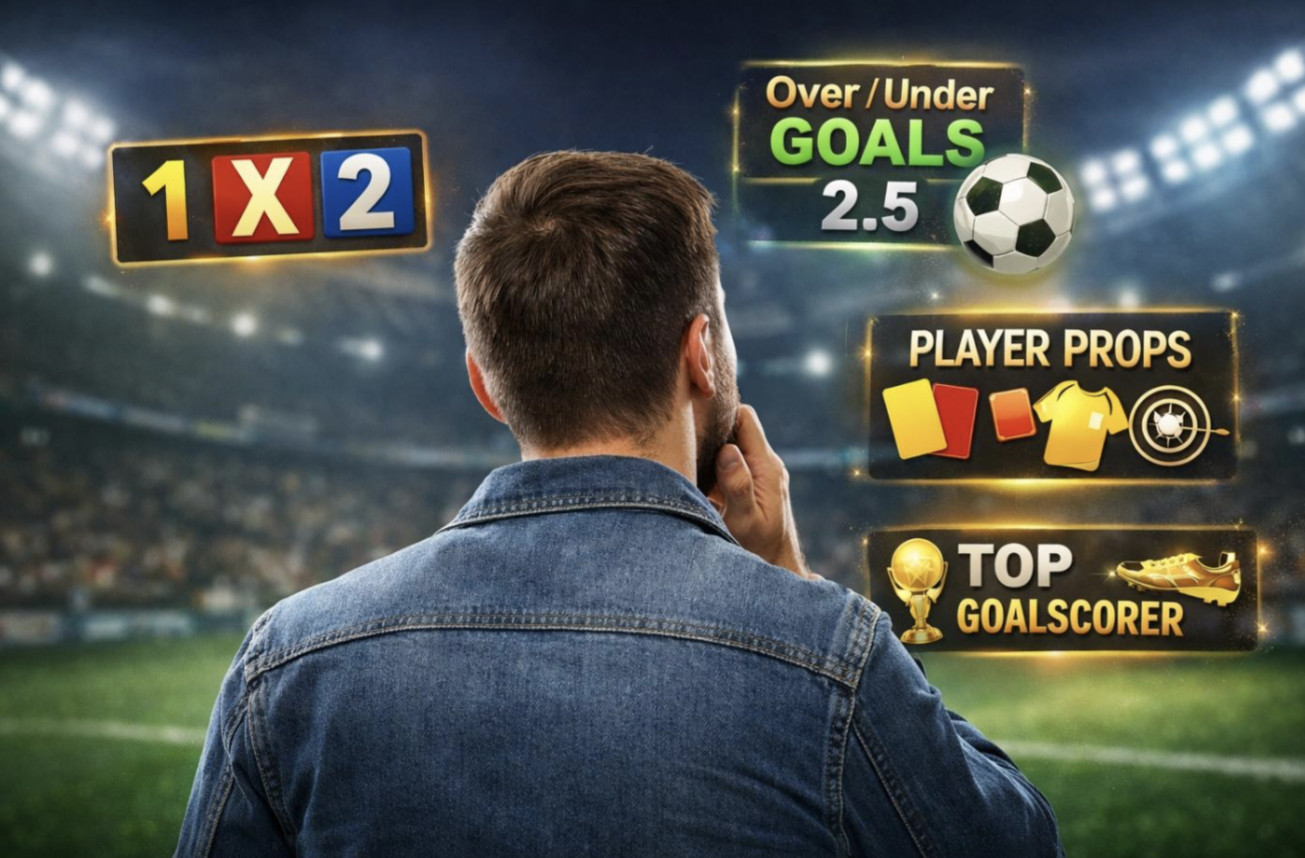
Put simply, a market is a specific outcome you’re wagering on. The final result of a match is one market. How many goals are scored is another. Whether a particular player gets booked is yet another. Bookmakers price up each of these outcomes based on their assessment of probability — team quality, recent form, injuries, tactical matchups, and historical patterns all feed into those numbers.
During a tournament like the World Cup, markets split into two broad types: pre-match (everything available before kickoff) and in-play (markets that stay open and update in real time as the game unfolds). The distinction matters more than people realize, and we’ll come back to it.
One thing worth noting upfront: the World Cup presents some genuinely unusual betting conditions. Squads change between tournaments, managers rotate players mid-group-stage, and teams can be half-qualified before the final round of group games even kicks off. Motivation isn’t constant. That inconsistency cuts both ways — it creates chaos, but also genuine value for people who pay attention.
Match Result Markets
Before diving into the more complex stuff, it’s worth getting comfortable with the basics. Match result markets are the foundation of football betting — they’ve been around the longest, they’re the easiest to understand, and they’re where most people start. If you’re still finding your feet with FIFA World Cup betting odds, these are the markets to focus on first.
1X2
The bread and butter. You pick one of three outcomes: home win, i.e., the win of a team that’s listed first in the offer (1), draw (X), or away win (2). It’s the most straightforward market there is and a sensible starting point if you’re new to this.
During the group stage, especially when results tend to be more open, this is where most casual bettors start.
Double Chance
This one lets you cover two outcomes with a single bet — say, a win or a draw.
The odds are lower because your chances of winning are higher, but it’s a useful tool when you think a team will avoid defeat without being confident; they’ll win outright.
Draw No Bet
If the match ends level, you get your stake back. Simple as that.
It’s particularly useful in knockout games where one goal can define 90 minutes of cautious football. Consider a hypothetical 2026 group match between Spain and Cape Verde — a “draw no bet” on Spain gives you a cushion if neither side breaks the deadlock.
Goals Markets
Match result markets tell you who wins. Goals markets don’t care about that at all — they’re purely about what happens in terms of scoring. That shift in focus opens a different way of thinking about a game.
You might have no strong view on whether Germany beats Ecuador, but a clear sense that it’ll be an open, high-scoring affair. That’s where these markets come in.
Over/Under Goals
You’re not predicting the result here, just the volume of goals. The most common line is 2.5 — bet “over,” and you need three or more goals; bet “under,” and you need two or fewer.
Plenty of bettors actually prefer this market because you don’t have to worry about who wins, just whether the game opens up.
Both Teams to Score (BTTS)
Yes or no — do both sides get on the scoresheet?
It sounds simple, and structurally it is, but the value here depends heavily on team selection and tactical context. Two attacking teams with leaky defenses is a very different proposition to a defensively disciplined side against a side rotating their front line.
Correct Score
High odds, great difficulty. Predicting the exact scoreline is genuinely hard, and the luck involved makes it unreliable as a reliable strategy.
Worth the occasional flutter, but not something to build a betting approach around.
Player-Based Markets
World Cups have a way of turning players into household names almost overnight — and bookmakers know that. Player markets attract a lot of casual money, which sometimes means the odds aren’t as sharp as they’d be on a regular league weekend.
Anytime Goalscorer
Your chosen player scores at some point during the match. Doesn’t matter when.
This is probably the most popular player market during the tournament, and it’s a relatively clean bet — you win, or you don’t, based on one simple condition.
First or Last Goalscorer
Trickier. The timing element introduces significant variance.
First goalscorer markets in particular tend to be badly priced on favorites because of the public attention they attract.
Player Props
Shots on target, assists, yellow cards… — these markets vary quite a bit in availability and quality depending on the bookmaker.
In a tournament with this much media coverage, elite players attract a lot of prop action. That cuts both ways in terms of value.
Tournament Outright Markets
Most betting happens match by match — one game, one result, done. Outright markets work differently. You’re backing something that won’t be settled for weeks, across potentially seven matches and countless variables. That makes them harder to call, but also more interesting. A well-timed bet on a genuine contender before the tournament starts — when the FIFA World Cup betting odds are still generous — can pay off far better than anything you’d find closer to the final.
World Cup Winner
You’re backing a team to lift the trophy. FIFA World Cup betting odds on outright winners fluctuated throughout the tournament. A shock result in the quarterfinals can completely reshape the market overnight.
If you’re betting outright, early in the tournament is usually when you’ll find the best prices on genuine contenders.
Top Goalscorer (Golden Boot)
Group-stage draw matters a lot here.
A striker facing weaker opposition in the groups has a structural advantage. Penalty-takers are worth considering too — tournament football tends to produce more spot-kicks than regular league play.
To Reach the Final or Semifinal
A more measured alternative to picking the outright winner.
If you like a team’s route through the draw but aren’t convinced, they’ll go all the way, this is a reasonable middle ground.
Group Stage Markets
Predicting which teams top their groups or advance to the knockout rounds is a staple of tournament betting. With 48 teams in 2026, the group stage becomes genuinely harder to call — more unfamiliar nations, more potential for upsets, and more rotation from the bigger sides once qualification is secured. That complexity is also what creates value.
If you’re comparing odds across different football bookmakers for these markets, small discrepancies in pricing can add up over the course of a full group stage.
Handicap Betting
Not every World Cup match is between evenly matched sides — and standard 1X2 markets reflect that. When one team is a heavy favorite, the odds on them winning outright shrink to the point where there’s not much value in backing them. Handicap betting exists to solve that problem. By giving one side a virtual head start or deficit before kickoff, it levels the playing field and puts more meaningful odds back on the table.
Asian Handicap
This removes the draw entirely and applies a virtual head start or deficit to one team.
Brazil at -1 means they need to win by two clear goals for your bet to land. It sounds complicated at first, but once you understand it, it’s actually a cleaner market than the standard 1X2 — especially for one-sided matchups.
European Handicap
Keeps the draw as a possible outcome but adjusts the goal line.
So you might back Germany -1, and they need to win by 2, or back the smaller side at +1, and they just need to avoid losing by more than 1.
Note: Both formats are worth exploring in 2026, given that the expanded field almost guarantees some group-stage games between very unevenly matched sides.
In-Play Betting
Live betting lets you wager during the match, with odds updating constantly to reflect what’s actually happening on the pitch. A red card shifts things dramatically. A goal against the run of play changes the complexion of the game entirely. If you’ve been watching and noticed something that the bookmaker’s algorithm hasn’t fully priced in yet, that’s where in-play can be interesting.
Common in-play markets include the next team to score, updated match winner, and total goals. The pace is fast, and the temptation to chase a bad early bet is real. That last bit is probably the biggest risk — in-play betting rewards discipline more than it rewards instinct.
Special Markets
Beyond the standard fare, World Cups attract a raft of novelty and event-specific markets: will a penalty be awarded in the match, will a red card be shown, how will the game be decided if it goes to extra time? VAR decisions have even started appearing as a market at some bookmakers.
These are fine as entertainment but genuinely difficult to price well, even with solid knowledge. Treat them accordingly.
Understanding FIFA World Cup Betting Odds
Most bookmakers display FIFA World Cup betting odds in decimal format. The odds of 2.00 mean you double your stake. Odds of 3.50 mean a €10 bet returns €35, including your original stake.
The implied probability behind any price is calculated by dividing 1 by the odds: 2.00 equals 50%, 4.00 equals 25%. When you start thinking about bets in terms of implied probability rather than payout, it changes how you evaluate them — you’re asking whether the bookmaker has the right picture, not just who you’d like to win.
Prices shift throughout the tournament based on results, team news, and where public money is going. A favorite that’s attracted heavy early betting will often shorten regardless of whether its actual chances have changed.
Pros & Cons of Betting on Multiple World Cup Markets
As the World Cup offers a wide variety of betting markets — from simple match results to complex player props — many bettors are tempted to explore several at once. While this approach can open up opportunities, it also comes with trade-offs.
| Pros | Cons |
|---|---|
| More opportunities to find value. Different markets can reveal odds that don’t fully reflect reality, especially in fast-moving tournaments. | Higher complexity. Managing multiple markets requires deeper knowledge and can quickly become overwhelming for beginners. |
| Flexibility in betting strategy. You’re not limited to just picking winners; you can adapt based on match dynamics, team styles, or player form. | Increased risk of overbetting. More markets often lead to more bets, which can hurt bankroll discipline. |
| Better use of match insights. Even if you’re unsure about the result, you can still profit from goals, player performance, or live situations. | Harder to track performance. It becomes difficult to evaluate what’s working when spreading bets across many markets. |
| Stronger live betting potential. In-play markets allow you to react to momentum shifts, injuries, or tactical changes. | Emotional decision-making. Fast-changing odds in live betting can lead to impulsive bets. |
| Useful in unpredictable tournaments. With formats like the 2026 World Cup, alternative markets can offer safer angles. | Requires more time and research. Understanding niche markets, such as player props or handicaps, requires extra effort. |
Where to Start Based on Experience
If you’re relatively new to this, match result markets and over/under goals are the right places to begin. They’re straightforward to understand and easy to research. Double chance adds a bit of security on top.
More experienced bettors tend to find more value in handicap markets, player props, and outright futures — not because they’re inherently better, but because they require more context to price correctly, and bookmakers don’t always get it right. That gap is where the interesting decisions happen.
Common Mistakes Worth Avoiding
Backing household names on reputation alone is probably the most common one. Big teams rotate, key players carry niggles into tournaments, and early group games are often approached cautiously. Ignoring squad depth and motivation — especially for teams that clinch qualification early — leads to many avoidable losses.
Overusing high-variance bets like correct score is another. The odds look appealing until you realize how rarely they actually come in. And in-play chasing — trying to recover an early loss by escalating your stakes mid-match — is probably where most people do the most damage to themselves.
What Changes in 2026
The sheer scale of this tournament is worth appreciating. More teams, more matches, three host nations, and longer travel distances for players — all of which introduce variables that don’t exist in a standard tournament. Squad management becomes a bigger factor. Upsets in the group stage become more likely. And the range of available markets — and the FIFA World Cup betting odds attached to them — across the whole competition will be wider than anything we’ve seen before. For a practical walkthrough of the basics before the tournament starts, this guide on betting on the World Cup 2026 is a solid starting point.
Final Thoughts
There are a lot of ways to engage with World Cup betting, and most of them are more interesting than just picking a winner and hoping for the best. Understanding the range of markets available — and what each one actually requires you to get right — is the difference between guessing and making a considered decision.
The 2026 tournament will be the largest and most complex World Cup in history. That creates noise, but it also creates opportunity for anyone willing to do a bit of homework before placing their bets.
Frequently Asked Questions
Latest Tips
Australia vs Turkey
Australia and Turkey begin their 2026 FIFA World Cup campaigns in what could quietly become one of the most important opening fixtures of Group D. With the United States viewed as the group favorite a...
Read More
Haiti vs Scotland
On June 13, Scotland will play Haiti in Group C, marking the start of both teams’ 2026 FIFA World Cup campaigns. “The Tartan Army” has its best opportunity of earning three points in this stage of ...
Read MoreUSA vs Paraguay
The Group D match between the USA and Paraguay will conclude the second day of the 2026 FIFA World Cup. The USMNT has this covered if the most recent H2H is to be believed. Given that the USA is the t...
Read MoreCanada vs Bosnia and Herzegovina
On the second day of the competition, the eyes of two countries—Canada and Bosnia—will be on Toronto Stadium, where one of the co-hosts begins its FIFA World Cup 2026 campaign with a first-ever World ...
Read MoreLatest News
Entain Pushes for Crackdown on Unlicensed Gambling Sponsorships in English Football
Entain, the global betting and gaming company behind Ladbrokes and Coral, has intensified pressure on English football authorities by urging the newly formed Independent Football Regulator (IFR) to pr...
Read MoreClassic Maps and Gameplay Return: CS: GO Mobile Launch in Progress
For years, the idea of an official mobile version of Counter-Strike felt more like community wishful thinking than a serious possibility. But fresh leaks, datamined files, and growing speculation acro...
Read MoreLast to Qualify, First to Announce Roster: Bosnia and Herzegovina Reveals 2026 World Cup Squad
Bosnia and Herzegovina has officially become the first nation to announce its final 26-man squad for the 2026 FIFA World Cup, with head coach Sergej Barbarez unveiling a roster that mixes veteran lead...
Read MoreFanatics-Owned Trading Card Brand Lands Historic FIFA Collectibles Deal
For decades, FIFA World Cup sticker albums and trading cards were almost synonymous with Panini. That era is now officially coming to an end. FIFA has signed a long-term licensing agreement with Topps...
Read More