

2026 World Cup Participants’ Visa Issues Pile Up, Infantino Defends FIFA: “Chill, Relax”
With the 2026 FIFA World Cup now underway across the United States, Canada, and Mexico, FIFA President Gianni Infantino has responded to growing criticism surrounding ticket prices and, especially, visa-related issues. Speaking in Mexico City ahead of the tournament’s opening matches, Infantino defended FIFA’s handling of both matters, arguing that the organization has spent years preparing for the event while acknowledging that some challenges remain outside its control.
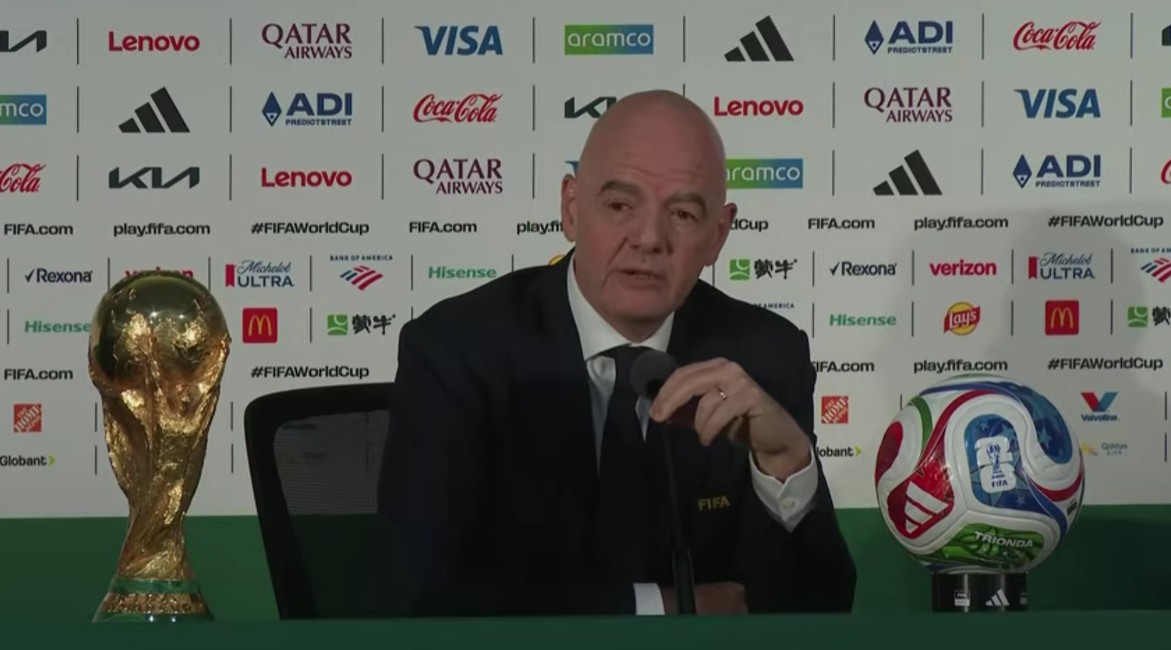 Image: FIFA President, Gianni Infantino, Mexico City press conference (screenshot youtube.com/@ESPNUK)
As the biggest World Cup ever, featuring 48 teams and 104 matches, the tournament has attracted unprecedented attention both on and off the pitch. One of the most frequently discussed topics before kickoff has been the cost of attending matches. Fans and supporters’ groups have voiced concerns that tickets for some fixtures have become too expensive, particularly for those hoping to travel between host cities.
Infantino rejected suggestions that FIFA had mishandled pricing, arguing that significantly cheaper tickets could have benefited ticket resellers rather than football itself.
“If we sold tickets for less, the resellers would earn more money. Why should the resellers earn money and not FIFA?” he said.
According to FIFA, demand has remained exceptionally strong despite the criticism, with millions of tickets sold across the three host nations. The governing body maintains that revenue generated from major tournaments is reinvested into football development programs around the world.
The debate has nevertheless highlighted the challenges of staging a global sporting event in North America, where travel, accommodation, and entertainment costs are often considerably higher than at previous World Cups.
Infantino Defends FIFA’s Role and Tells Critics to “Chill, Relax”
Alongside ticketing concerns, questions have also been raised about visa issues affecting certain tournament participants and visitors. The matter gained attention after reports emerged that Somali referee Omar Abdulkadir Artan was unable to enter the United States due to “vetting concerns” despite reportedly holding valid travel documentation. The latest tournament update states that the visa application of Ghanaian national team player Thomas Partey has been denied. The former Arsenal midfielder has been charged with seven counts of rape and one count of sexual assault by London’s Metropolitan Police and is awaiting trial, which has been pushed back to start one year from now.
Infantino emphasized that FIFA can assist and communicate with governments, but can’t override immigration laws or force countries to grant entry.
“We can’t force a country to grant a visa to someone,” he said, stressing that immigration decisions ultimately belong to national authorities rather than sporting organizations.
As criticism mounted, the FIFA president encouraged observers and journalists not to overreact to isolated incidents.
“Maybe sometimes it’s good as well to chill, relax,” Infantino remarked, arguing that challenges are inevitable at an event involving dozens of nations, thousands of participants, and millions of visitors.
He added that FIFA continues to work closely with host governments to resolve issues wherever possible and remains confident that cooperation between all parties will help ensure a successful tournament.
Focus Shifts Toward Football
Despite the off-field discussions, attention is gradually turning to the action on the pitch. The expanded format has created new storylines, fresh rivalries, and opportunities for emerging football nations to compete on the world’s biggest stage.
Fans following the tournament are not only tracking results but also exploring resources such as top FIFA World Cup betting sites, team previews, and tournament analysis as excitement builds throughout the group stage.
For FIFA, the ultimate goal is for the football itself to become the lasting memory of the competition. While debates over ticket affordability and travel logistics may continue throughout the tournament, Infantino believes the scale, atmosphere, and global reach of the 2026 World Cup will ultimately define its legacy.
As the first matches begin, FIFA hopes the conversation will increasingly focus on the players, teams, and moments that make the World Cup one of the most-watched sporting events in the world.

FAQ