World Cup 2026: Why This Tournament Is Unlike Any Other

Contents
- World Cup 2026: Why This Tournament Is Unlike Any Other
- A Tournament Reimagined: The 48-Team Expansion
- Three Nations, One World Cup
- What This Means for Fans
- A Logistical Giant Unlike Anything Before
- Pros & Cons of a Three-Country World Cup
- More Teams, More Stories
- Potential Underdog Narratives
- Commercial Power and Global Reach
- Player Workload and Competitive Balance
- Tactical Evolution of the Game
- Technology and Fan Experience
- Why FIFA World Cup 2026 Could Be the Most Unpredictable WC Ever
- The Legacy of World Cup 2026
- Conclusion
- Frequently Asked Questions

 Best Bookmakers for United States





KEY TAKEAWAYS:
- Format is everything. 48 teams, 104 matches, a new round of 32 — the structure alone makes this the most unpredictable World Cup ever staged.
- Three countries, one tournament. Never before has a World Cup spanned this much geography, climate, and culture simultaneously.
- This is the blueprint. How 2026 lands will define what the World Cup looks like for decades to come.
A Tournament Reimagined: The 48-Team Expansion
For nearly three decades, the World Cup settled comfortably into its 32-team format: eight groups of four, 64 matches, and a clear, well-understood road to the final. That era is officially over. The FIFA World Cup 2026 introduces 12 groups of four teams, with the top two finishers from each group — plus the eight best third-place sides — advancing to a brand-new round of 32. The total match count jumps from 64 to 104, a 63% increase in football.
The practical consequences of this expansion are enormous. More teams mean more variety of playing styles arriving on the pitch. Nations from regions that previously had to scrape for qualification spots now have more genuine pathways into the tournament proper. And crucially, the added round of knockout football means even the strongest sides need to be at their best one game earlier than before — there’s no longer a soft entry into the last 16.
The unpredictability this creates shouldn’t be underestimated. In a 32-team format, the pattern of favorites progressing was relatively reliable. With 48 sides and eight additional third-place qualifiers, chaos becomes a structural feature, not a bug.
Three Nations, One World Cup
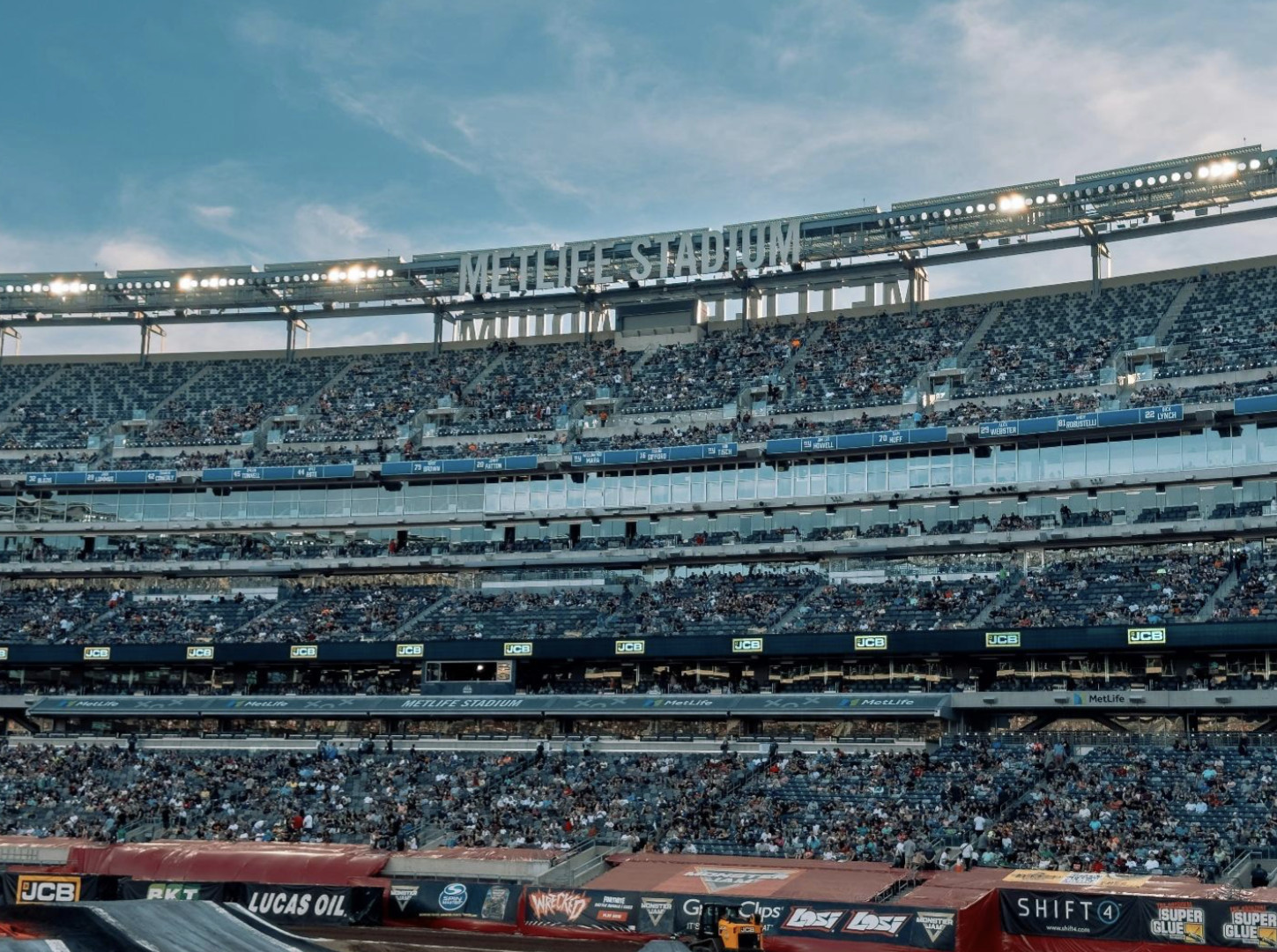
The United States, Canada, and Mexico are co-hosting the 2026 edition — the first time in World Cup history that three nations have shared the honor. The United States is hosting the bulk of the games across 11 cities, while Canada contributes Toronto and Vancouver, and Mexico brings its legendary venues in Mexico City, Guadalajara, and Monterrey. The opening match takes place at the iconic Estadio Azteca, a ground that has witnessed some of football’s most unforgettable moments. The final will be held at MetLife Stadium in New Jersey.
What This Means for Fans
For supporters planning to follow their nation through the group stage and beyond, this tournament poses a logistical challenge unlike anything a World Cup has demanded before. A fan traveling from Vancouver to watch a knockout match in Miami is covering roughly the same distance as flying from London to Riyadh. Time zones span the width of an entire continent. Group-stage fixtures in cool, northern Canadian cities might be followed by sweltering knockout rounds in Texas or central Mexico.
But this complexity also delivers something extraordinary in return: cultural richness. Within a single tournament, fans will experience the electric atmosphere of Mexican football culture, the bilingual energy of Canadian cities, and the commercial spectacle of American sport. It’s a travelling festival of football identity, and no previous World Cup has offered anything remotely like it.
A Logistical Giant Unlike Anything Before
From a purely operational standpoint, the FIFA World Cup 2026 is staggering in its scale. The distance between the northernmost venue — Vancouver — and the southernmost — Monterrey — is over 4,000 kilometres. Climate conditions vary from pleasantly mild Pacific coast temperatures to the heavy June heat of northern Mexico, where the mercury regularly climbs past 35°C. Stadiums that normally host NFL gridiron (American) football have been fitted with natural grass pitches to meet FIFA standards. Infrastructure projects across all three countries have been years in the making.
FIFA addressed some of this complexity by dividing the 16 host cities into three regional zones — Western, Central, and Eastern — to reduce unnecessary cross-continental travel for teams and fans during the group stage. Still, the sheer logistical ambition of this tournament has no precedent. It’s the most geographically expansive World Cup ever held.
Pros & Cons of a Three-Country World Cup
For the first time in history, the World Cup won’t belong to just one nation—it will be shared across three. On paper, that sounds like a perfect evolution: bigger stadiums, more fans, and a tournament that stretches across an entire continent. But once you look a bit closer, it’s not that simple. The same scale that makes this World Cup exciting also brings complications—long travel distances, time zone differences, and a more fragmented overall experience.
Like many things about 2026, the three-country setup comes with clear upsides, but also a few trade-offs that could shape how the tournament actually feels for players and fans alike.
| Pros | Cons |
|---|---|
| Unmatched scale and global appeal across three major markets | Travel distances between venues are massive |
| Diverse fan experiences across cultures and cities | Time zone differences can disrupt teams and viewers |
| Increased stadium capacity and infrastructure quality | Fragmented atmosphere compared to single-host tournaments |
| More ticket availability across regions | Complex logistics for fans (visas, flights, costs) |
| Boosts football growth across North America | Less “centralized” World Cup feeling |
More Teams, More Stories
Perhaps the most quietly significant consequence of the expanded format is the arrival of nations that have never — or rarely — appeared on football’s biggest stage. The quota increases for confederations like Africa, Asia, and North America mean that nations from football’s growing edges now have genuine berths, not just mathematical possibilities. Football’s global footprint is visibly widening.
Potential Underdog Narratives
History has shown that World Cups are defined less by their champions than by their surprises: Senegal in 2002, South Korea’s run the same year, Iceland’s wall in 2018, Morocco’s 2022 semifinal, etc. With 16 more nations on the pitch, the likelihood of a genuinely shocking run from an unexpected quarter is higher than at any previous tournament.
Smaller football federations will receive a level of global exposure that transforms the sport in their home countries for a generation. The stories that emerge from the group stage alone could be extraordinary.
Commercial Power and Global Reach
This tournament will be the most commercially potent World Cup in history. North America is the world’s largest advertising market, and placing the tournament across the United States, Canada, and Mexico — with matches scheduled to accommodate prime-time viewing across the Americas — unlocks broadcast revenues that dwarf any previous edition. FIFA has confirmed a total prize fund of $727 million, up 50% on the figure for Qatar 2022, with the winning nation’s federation taking home a record $50 million.
Sponsorship deals have reached new heights, and the expected global television audience will set records. Whether you’re a casual viewer or someone who actively uses the best soccer betting sites to follow the action match by match, 104 games across six weeks means there is no shortage of football to engage with. The commercial ecosystem surrounding this tournament is, in every sense, unprecedented.
Player Workload and Competitive Balance
Not everyone is celebrating the expansion. Coaches and club managers have raised legitimate concerns about player fatigue. A squad that reaches the final in 2026 will play seven matches — the same as before — but the road through an additional knockout round is longer and less forgiving. The round of 32 adds an extra high-stakes game before the tournament even begins, making it feel like the sharp end of competition. For players already carrying a full club season in their legs, this matters.
Squad depth, therefore, becomes more valuable than ever. Nations that can rotate intelligently — resting key players through easier group games while maintaining quality — will have a structural advantage over sides that rely on a narrow core of performers. The tension between club and country will intensify, with club managers watching their star players navigate an even longer international summer.
Tactical Evolution of the Game
Coaches preparing for the FIFA World Cup 2026 are being asked to think differently. A longer tournament means conditioning and rotation strategies need to be planned across seven potential games from the very first team selection. Meeting a wider variety of group-stage opponents demands broader scouting and tactical flexibility. No longer can a team simply rely on a Plan A and a solid Plan B. Depth across the squad — in both quality and tactical adaptability — becomes the defining competitive edge.
Expect many of the traditional powerhouses to approach the early stages with caution. You probably won’t see the big teams flying out of the blocks in this one. It’s more likely they’ll take a measured approach early on—get the result, avoid unnecessary risks, and keep key players from burning out too soon. With a longer tournament ahead, it’s not just about playing well; it’s about lasting. In a setup like this, the teams that manage themselves properly could have a real edge over those that just try to dominate every game.
Technology and Fan Experience
At the same time, the FIFA World Cup 2026 takes place in a very different technological era than past editions. The match ball, the Adidas Trionda, isn’t just there to look good—it’s actually part of the decision-making process. It sends data straight into the VAR system, which should help referees react faster in key moments. There’s also more AI involved behind the scenes, which, in theory at least, should cut down on long pauses and some of the debates we’re used to seeing.
Stadium technology across the 16 venues has been upgraded significantly, with streaming and digital coverage planned to reach audiences on every populated continent. FIFA has also confirmed that the final at MetLife will feature a Super Bowl-style halftime show — a mark of the event’s growing ambition beyond football itself.
Why FIFA World Cup 2026 Could Be the Most Unpredictable WC Ever
Put it all together, and the conclusion is difficult to resist: the 2026 tournament is structurally designed for chaos. More teams means more genuine variation in quality and style. A new knockout round means that even the safest-looking path to the final carries an extra obstacle. The climate and travel demands across a three-nation host will create conditions no squad has previously navigated. Favourites will be vulnerable in ways they simply weren’t in Qatar or Russia.
For anyone tracking the odds — whether through one of the best World Cup betting sites or simply following pundit predictions — picking a clear favorite this time around is a genuinely difficult exercise. A single dominant team seems less likely to emerge than at any recent edition, and the second week of the knockout stage could deliver the most memorable series of results the sport has ever seen in a single fortnight.
The Legacy of World Cup 2026
The “Las Vegas saying” doesn’t apply to the upcoming World Cup; what happens in 2026 won’t just stay in 2026. This tournament is likely to leave a lasting mark on football well beyond the final whistle. Nowhere is that more true than in North America. While the sport has grown quickly in recent years, it still lags behind American football (NFL), basketball (NBA), and baseball (MLB) in everyday attention. Hosting the biggest sporting event in the world feels like a moment that could shift that balance—at least a little. Major League Soccer’s (MLS) continued expansion, increased grassroots participation, and the commercial investment that follows a successful hosting will all be shaped by what happens between June and July 2026.
Internationally, the 48-team format is almost certainly the permanent future of the World Cup. How it lands in practice — whether the additional games feel essential or the new qualifying nations produce genuine competition — will define how FIFA shapes the tournament for decades to come. The 2026 edition is as much a pilot programme for football’s future as it is a competition in its own right.
Conclusion
There have been larger crowds, more dramatic finals, and more iconic individual performances at previous World Cups. But no edition of the tournament has ever attempted as much, simultaneously, as the FIFA World Cup 2026. Three nations. Forty-eight teams. One hundred and four matches. An entirely new knockout structure. A commercial and broadcast scale that dwarfs everything before it.
This is a turning point — not just in the history of football’s greatest event, but in the global story of the sport itself. When the final whistle blows at MetLife Stadium on July 19, the game will look fundamentally different from how it did before kick-off in Mexico City. And that, more than any result, is what makes 2026 unlike anything we’ve seen before.
Frequently Asked Questions
Latest Tips
Turkey vs Paraguay
Turkey and Paraguay meet in their second Group D match at the 2026 FIFA World Cup, making this one of the pivotal fixtures in the race for qualification. Group D contains these two, plus the co-host, ...
Read More
Scotland vs Morocco
This is arguably the pivotal fixture in Group C at the 2026 FIFA World Cup. Both teams earned valuable results on Matchday 1, leaving them well-positioned to challenge for a place in the knockout roun...
Read MoreBrazil vs Haiti
This 2026 FIFA World Cup Matchday 2 encounter could prove decisive in Group C. Brazil entered the tournament as one of the favorites and opened with a 1-1 draw against Morocco, meaning it can’t afford...
Read MoreCanada vs Qatar
Canada and Qatar enter Matchday 2 of the 2026 FIFA World Cup knowing that a victory could dramatically improve their chances of reaching the knockout stage. Both teams opened their Group B campaigns w...
Read MoreLatest News
Unprecedented Staff Change: Tunisia Appoints New Head Coach After Just One Match in World Cup
The 2026 FIFA World Cup’s first coaching “casualty” is here. Tunisia’s campaign has barely begun, yet the team has already become the first nation in the tournament’s history to appoint the new coach ...
Read MoreNo One Has Ever Committed Fewer Fouls in World Cup Than Cape Verde Against Spain
Cape Verde may not have found the net against Spain, but the African side still etched its name into FIFA World Cup history during a remarkable 0-0 draw against Spain, who dominated possession and ter...
Read MoreCape Verde Stages One of Biggest-Ever Upsets in World Cup History, Egypt Follows Its Example
The 2026 FIFA World Cup delivered two major surprises on Day 5 as Cape Verde earned a historic draw against Spain, while Egypt claimed a valuable point against Belgium. The results left both Group H a...
Read MoreMusiala’s World Cup Goal Hands Bayern Munich Piece of History
Jamal Musiala announced himself on the World Cup stage in emphatic fashion, scoring in Germany’s stunning 7-1 opening-group demolition of Curaçao — and in doing so, quietly etching his name, even more...
Read More