World Cup 2026 Ticket Prices: Full Breakdown

Contents
- World Cup 2026 Ticket Prices: Full Breakdown
- A Tournament Unlike Any Other
- The Seating Category System
- FIFA World Cup 2026 Ticket Prices by Round
- Dynamic Pricing: The Wild Card
- How 2026 Compares to Previous Tournaments
- City-by-City Price Variations
- The Resale Market and What to Expect
- Practical Tips for Fans Still Looking
- Pros & Cons of Waiting for Last-Minute World Cup 2026 Ticket Sales
- The Bottom Line on FIFA World Cup 2026 Ticket Prices
- Frequently Asked Questions

 Best Bookmakers for United States





KEY TAKEAWAYS:
- The FIFA World Cup 2026 is the most expensive in history.
- Dynamic pricing and a 15% service fee are the two biggest cost traps.
- The “affordable” ticket-price tier is essentially inaccessible to the general public.
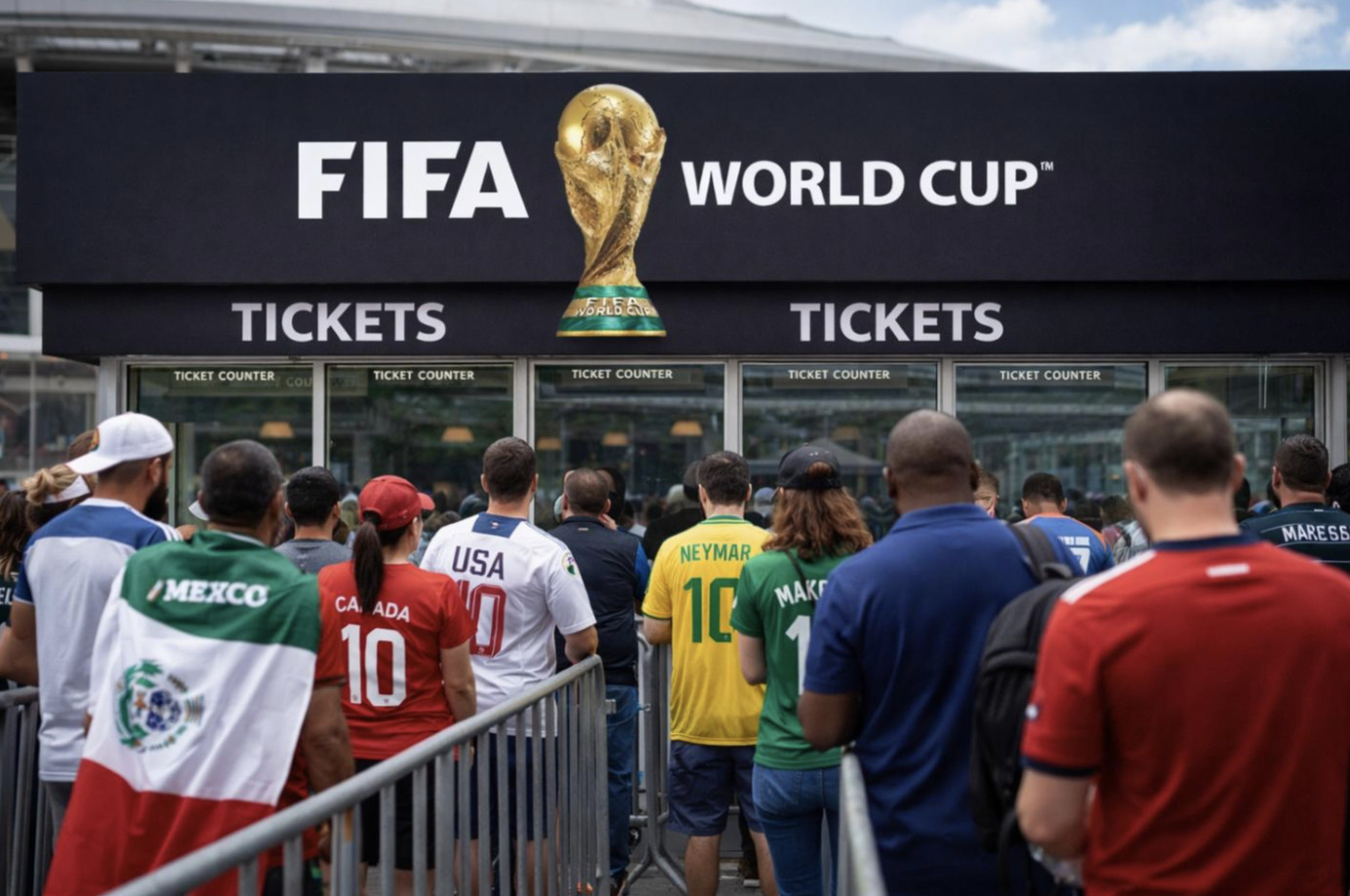
Whether you’re planning to catch a group-stage clash in Kansas City or dream of being inside MetLife Stadium for the July 19 final, understanding the full picture of FIFA World Cup 2026 ticket prices is the first step toward budgeting realistically for the trip of a lifetime.
A Tournament Unlike Any Other
Before diving into the numbers, it helps to understand why pricing has reached these levels. The 2026 edition is the first-ever 48-team World Cup, spread across 16 host cities in the United States, Canada, and Mexico. That expansion means 104 matches in total — up from 64 in Qatar — and an organizational scale without precedent. FIFA itself projects tournament revenue exceeding $10 billion, the largest haul in the history of any sporting event.
Compounding the scale is the venue factor. The majority of games take place across high-cost American markets — Los Angeles, New York/New Jersey, Dallas, Miami, and others — where arena economics, local demand, and the sheer purchasing power of North American consumers push prices well beyond what fans in Europe or South America typically expect to pay for a football ticket.
The Seating Category System
FIFA restructured its ticketing categories for the 2026 World Cup in a way that surprised many veteran World Cup attendees. Rather than dividing seats by proximity to the pitch — as was standard in previous tournaments — the 2026 system sorts tickets by how high up you sit in the stadium. Category 1 covers lower-tier and lower-bowl seating closest to pitch level, while Categories 2, 3, and 4 move progressively higher into the upper tiers. For fans accustomed to paying lower prices to sit in upper sections, this inversion came as an unwelcome change.
Following a global backlash over initial pricing announced in late 2025, FIFA introduced a fifth tier: the Supporter Entry Tier, priced at a flat $60 per ticket for all 104 matches, including the final. This tier isn’t available to the general public — it’s distributed exclusively through national football federations to loyal supporters with a qualifying attendance history. Each match receives only around 400–500 tickets in this tier, making it effectively inaccessible for most fans.
FIFA World Cup 2026 Ticket Prices by Round
Below is a breakdown of face-value ticket prices across the tournament’s different stages. All prices are in US dollars before FIFA’s 15% service fee, which applies to every purchase through the official portal.
| Stage | Category 1 | Category 2 | Category 3 | Category 4 (Supporter) |
|---|---|---|---|---|
| Group stage (neutral) | $620 | $370 | $200 | $120–$140 |
| Group stage (host nation) | $1,745–$2,735 | $900–$1,400 | $560–$900 | $140–$265 |
| Round of 32 / round of 16 | $800–$1,200 | $500–$700 | $300–$500 | $150 |
| Quarterfinals | $1,200–$1,500 | $700–$900 | $400–$600 | $150 |
| Semifinals | $2,500+ | $1,200+ | $800+ | $200 |
| Final (MetLife Stadium) | $7,875 | $3,295–$5,000 | $1,490 | $60 (federation only) |
Note: Add 15% to each figure above to get the actual price charged at checkout. A $620 Category 1 group-stage ticket increases to approximately $713 after fees are applied.
Dynamic Pricing: The Wild Card
For the first time in World Cup history, FIFA has implemented dynamic pricing for the 2026 tournament. This means face-value ticket costs are not fixed — they shift based on real-time demand signals, including which teams are involved, the host city, and the sales phase. A generic round of 16 ticket priced at one level before the group stage draw can climb the moment a high-profile nation locks in that slot sharply.
Dynamic pricing is common in the US entertainment industry, but was a major point of contention among international fans and supporter groups. Football Supporters Europe (FSE) and consumer group Euroconsumers filed a formal complaint with the European Commission over the practice. FIFA’s rationale was that the system reflects genuine market demand — but critics argued it primarily maximizes revenue at the expense of ordinary fans.
How 2026 Compares to Previous Tournaments
The numbers are stark in a historical context. In 1994, the last time the United States hosted the World Cup, ticket prices ranged from $25 to $475. In Qatar in 2022, the price range ran from roughly $70 to $1,600. The most expensive category for the 2026 final — $7,875 face value — is approximately four times higher than the Qatar equivalent. Even the cheapest general-public ticket has nearly doubled compared to 2022.
Following a fan-led outcry in December 2025, US lawmakers joined the chorus, with a group of Democratic representatives writing to FIFA demanding justification for the pricing strategy. UK Prime Minister Keir Starmer also publicly urged FIFA to go further with its affordable tier — though the concession FIFA ultimately made—the Supporter Entry Tier at $60—was widely described as symbolic, given how few such tickets actually exist.
City-by-City Price Variations
Where a match takes place matters enormously for FIFA World Cup 2026 ticket prices. The United States hosts 78 of the 104 games and commands the highest prices across all categories. Matches in Los Angeles (SoFi Stadium) and New York/New Jersey (MetLife Stadium) are the most expensive, driven by local demand, iconic venues, and the high-value matchups assigned to those cities. Mexico City’s Estadio Azteca, which hosts the tournament opener, also commands premium pricing due to its historic significance.
At the more affordable end of the spectrum, group-stage matches in smaller US markets such as Kansas City (Arrowhead Stadium) and Boston (Gillette Stadium) offer the most accessible entry points for general fans — typically starting from $120–$200 for Category 3 seats before fees. Weekday fixtures in these markets tend to carry lower demand and therefore sit at the lower end of the dynamic pricing range.
The Resale Market and What to Expect
FIFA introduced its own official resale platform for 2026, a departure from previous tournaments where secondary-market activity was more tightly restricted. In the US and Canadian markets, sellers on the FIFA resale portal are permitted to set their own prices with no cap — a full embrace of the scalping model that drew significant criticism from fan organizations worldwide. FIFA charges a 15% fee to both the buyer and the seller on each resale transaction, meaning the total overhead per transaction is 30%.
Final tickets on the official resale marketplace have already been listed at prices ranging from $5,000 to $15,000 and above, depending on category. For fans who do not secure face-value tickets through the official portal, third-party platforms such as StubHub carry 2026 inventory, though prices on those sites are largely uncapped for high-demand fixtures.
If you are tracking odds and markets around the tournament as it unfolds, comparing options through a reputable FIFA bookmaker can provide context on how each match is likely to play out — useful context, whether you’re deciding which round to attend or just following the action from afar.
Practical Tips for Fans Still Looking
The final phase of official ticket sales opened on April 1, 2026, on a first-come, first-served basis through the FIFA ticketing portal. This last-minute window is expected to remain open through the tournament, with FIFA reserving the right to release additional inventory sporadically. For neutral group-stage matches in lower-demand cities, some availability is expected to persist into the tournament itself — though popular fixtures involving Brazil, Argentina, England, or the host nations will go quickly.
For fans on a tighter budget, the third-place playoff on July 18 at Hard Rock Stadium in Miami consistently offers strong value at any World Cup: world-class players, a festive atmosphere, and prices notably below those for the semifinals and final. Group-stage matches in Kansas City or Boston involving mid-tier nations also remain among the most realistic face-value opportunities available.
Pros & Cons of Waiting for Last-Minute World Cup 2026 Ticket Sales
With FIFA’s last-minute sales phase now open through the duration of the tournament, many fans are weighing whether to hold off rather than pay peak resale prices. It can be a smart play — but only under the right circumstances. Here’s the full picture.
| Pros | Cons | |
|---|---|---|
| Pricing | Potential softening on low-demand, neutral fixtures in smaller markets | Resale prices rise closer to kick-off if the official portal runs dry |
| Information | You know the exact teams playing — no guessing on generic “round of 16” slots | High-demand games (USA, Brazil, Argentina) will already be gone |
| Process | Skip early lottery headaches, refund risks, and failed applications | No guarantee FIFA releases tickets for all 104 matches in this phase |
| Budget | Face-value tickets are still theoretically available through FIFA’s official portal | Last-minute flights and hotels can cost far more, wiping out any ticket savings |
| Psychology | More time to plan and compare options before committing | Live tournament atmosphere creates FOMO pressure that leads to overpaying |
| Flexibility | Ideal if you are open to any city and any neutral fixture | Poor strategy if you have a specific team, venue, or date in mind |
Verdict: Waiting is a reasonable approach for flexible, budget-conscious fans targeting lower-profile group-stage matches. For anyone with a firm fixture or team in mind, the risk of missing out entirely outweighs the potential savings.
The Bottom Line on FIFA World Cup 2026 Ticket Prices
FIFA World Cup 2026 ticket prices are the highest in tournament history by every measurable metric. For the average international fan, a realistic budget of $250–$500 per ticket covers a group-stage match in a mid-tier US city — before flights, accommodation, and the considerable markup hotels in host cities are already charging for match weekends. Following a team all the way to the final could cost upwards of $7,000 in face-value tickets alone.
That reality has not dampened demand — FIFA reported 20 million ticket requests in a single sales phase in December 2025, and FIFA President Gianni Infantino described it as the equivalent of a thousand years of World Cup demand arriving at once. Whatever your budget, planning early, staying flexible on city and fixture, and purchasing exclusively through official FIFA channels remain the smartest approaches to attending the world’s biggest sporting event.
Frequently Asked Questions
Latest Tips
Ilia Topuria vs Justin Gaethje
This is one of the biggest mixed martial arts (MMA) fights of 2026 and the centerpiece of the historic UFC Freedom 250 event. The card is being staged on the South Lawn of the White House, the residen...
Read More
Black Dragons vs Fluxo W7M
The South America League 2026 Stage 1 is the premier regional competition for Rainbow Six Siege teams in South America. Ten teams compete for prize money, circuit points, and qualification opportuniti...
Read MoreGen.G Esports vs KT Rolster
The LCK 2026 Road to MSI serves as South Korea’s final qualification tournament for the 2026 Mid-Season Invitational (MSI), determining which LCK teams will represent arguably the strongest League of ...
Read MoreFrance vs Italy
The FIVB Men’s Volleyball Nations League (VNL) is one of the most prestigious annual international volleyball competitions, bringing together the world’s top national teams across several weeks of eli...
Read MoreLatest News
Dembélé Backs Mbappé as France Star Says Criticism Has Gone Too Far
As France prepares to begin its 2026 FIFA World Cup campaign, one of the team’s biggest stars has stepped forward to defend captain Kylian Mbappé from what he believes has become excessive criticism. ...
Read More2026 World Cup Participants’ Visa Issues Pile Up, Infantino Defends FIFA: “Chill, Relax”
With the 2026 FIFA World Cup now underway across the United States, Canada, and Mexico, FIFA President Gianni Infantino has responded to growing criticism surrounding ticket prices and, especially, vi...
Read More2026 World Cup Opener at Azteca Sets All-Time Red Card Record
The highly anticipated 2026 FIFA World Cup officially kicked off on June 11, 2026, delivering an explosive opening day that immediately rewrote football history. Image: MEX vs RSA – Sampaio, the Br...
Read MoreIran Warns of World Cup Match Disruptions Amid Growing Political Tensions
With the 2026 FIFA World Cup set to begin on June 11, controversy surrounding Iran’s participation has intensified after Iranian officials warned, “minutes” leading to the competition start, that matc...
Read More