Portugal World Cup 2026 Preview: Squad, Odds & Best Bets

Contents
- Portugal World Cup 2026 Preview: Squad, Odds & Best Bets
- Portugal at the World Cup: A Quick Snapshot
- Road to World Cup 2026
- Projected Portugal Squad for 2026
- Ronaldo’s Last Dance
- Key Players to Watch
- Tactical Analysis: How Portugal Will Play
- Strengths & Weaknesses
- Pros & Cons Summary: The Portugal World Cup 2026 Squad
- Portugal World Cup 2026 Odds
- Best Betting Angles for Portugal
- Prediction: How Far Can Portugal Go?
- Final Verdict
- Frequently Asked Questions

 Best Bookmakers for United States





KEY TAKEAWAYS:
- The squad is elite — the system isn’t proven yet.
- Ronaldo’s role will make or break Portugal’s campaign.
- History is the biggest opponent — Portugal hasn’t gone beyond the quarter-finals at a World Cup since 2006.
Portugal at the World Cup: A Quick Snapshot
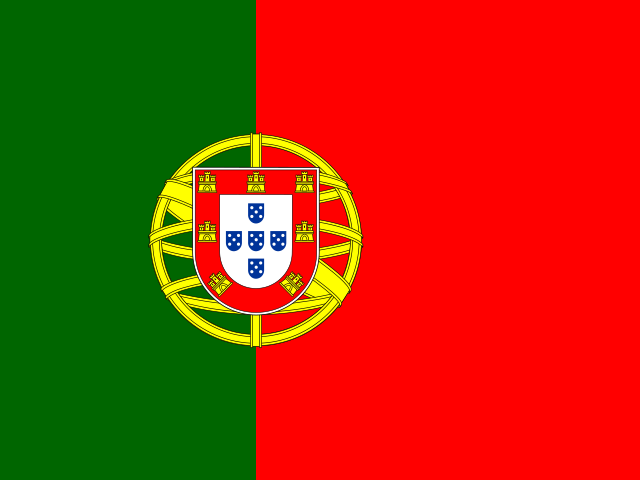
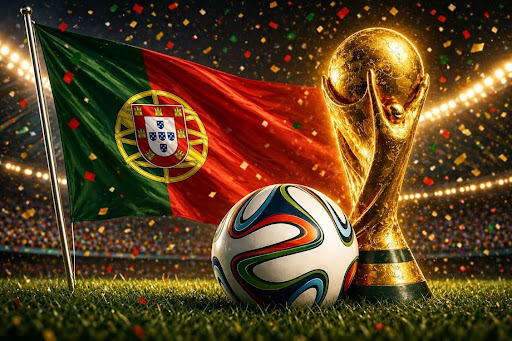
Portugal’s best World Cup finish remains third place in 1966, starring Eusébio, and fourth place in 2006 — the tournament that marked Ronaldo’s arrival as a global superstar. The “Seleção das Quinas” hasn’t progressed past the quarter-finals since that fourth-place finish, a record that sits uncomfortably alongside the extraordinary quality Portugal has consistently produced over the past two decades.
The 2016 European Championship title under Fernando Santos and the 2019 and 2025 Nations League triumphs – first under Santos and second under Martínez – represent the high points of recent years. But the World Cup remains unfinished business — and with a squad that combines experienced match-winners with an exciting generation of young talent, 2026 represents arguably the strongest platform Portugal has ever had to change that.
Road to World Cup 2026
Portugal had to wait until the final matchday of qualifying, but hammered Armenia 9-1 to ease any concerns it might have had about needing to rely on the play-offs. The qualification campaign was functional rather than spectacular — wins accumulated, but performances were inconsistent enough to prompt ongoing questions about Martínez’s system and attacking structure.
The Nations League triumph in 2025 provided genuine momentum and confidence, with Ronaldo finishing as the tournament’s top scorer. The March 2026 friendlies against Mexico and the United States were conducted without Ronaldo — sidelined by a hamstring injury — and produced mixed results: a goalless draw against Mexico before a more assured performance in a win over the United States, with goals from Francisco Trincão and João Félix.
Portugal is in Group K alongside Uzbekistan, Colombia, and DR Congo — a manageable group that should allow it to arrive at the knockout rounds without significant damage.
Projected Portugal Squad for 2026
Goalkeepers: Diogo Costa is the established first choice — composed, technically assured, and at 26, entering the peak years of his career. His shot-stopping and distribution make him one of the better goalkeepers at the tournament.
Defenders: The back four of Nuno Mendes, Rúben Dias, Gonçalo Inácio, and Matheus Nunes offers a well-balanced setup providing both defensive stability and attacking freedom from wider areas. Rúben Dias remains the defensive leader — dominant in the air, composed on the ball, and experienced at the highest level with Manchester City.
Midfielders: This is where Portugal’s squad is most impressive. Vitinha is arguably the best defensive midfielder in world football at his peak and will be the first name on Martínez’s teamsheet, while Bruno Fernandes provides creativity, pressing intensity, and goal threat from deeper positions. Bernardo Silva’s ability to operate across multiple roles gives Martínez tactical flexibility. João Neves is an emerging talent of extraordinary quality, and Mateus Fernandes has earned his first senior call-up after consistent performances at the Under-21 level.
Forwards: Rafael Leão and Francisco Conceição are expected to carry huge responsibilities in the attacking third alongside Ronaldo — pace, directness, and individual quality on both flanks. Gonçalo Ramos is a solid striking alternative, while Pedro Neto’s relentless attacking tenacity and delivery from wide makes him another dangerous option. João Félix provides creativity in tight spaces off the bench. Martínez has also acknowledged the need to settle the third striker role before the tournament, a position still being contested.
The squad also carries the emotional weight of the tragic loss of Diogo Jota, who passed away in a car crash in July 2025. The 2026 World Cup will be the first major tournament without him — a reality that will hover over the entire Portuguese campaign.
Ronaldo’s Last Dance
There’s no preview of the Portugal World Cup 2026 campaign that doesn’t begin and end with Cristiano Ronaldo. At 41, this is his sixth World Cup and almost certainly his last. Ronaldo has won almost everything there is to win, with the World Cup the only major trophy that has eluded him.
Having played 22 World Cup matches and scored eight goals with two assists, his tournament record is respectable but underwhelming for a player of his stature. The question that dominates every Portugal preview isn’t whether he’ll be in the squad — Martínez has made clear his World Cup participation isn’t in doubt despite the hamstring injury — but what role he should play.
A case can be made for using Ronaldo as an impact substitute rather than a guaranteed starter, but Martínez’s public comments suggest he remains central to the setup. The counter-argument is compelling: Portugal’s performances without Ronaldo in March showed a more fluid, dynamic attacking structure. Mourinho, for his part, has argued that Portugal can’t afford to be without — a view not universally shared.
What’s undeniable is the emotional and symbolic weight Ronaldo carries. The belief he generates — among players, staff, and supporters — is a real factor. Whether that translates into a World Cup winner’s medal at 41 is the most romantic and the most realistic question in football this summer.
Key Players to Watch
Bernardo Silva is Portugal’s most complete footballer — capable of playing as a false nine, a wide attacker, or a central midfielder. His intelligence, technical quality, and big-game temperament make him the most important player in the squad after Ronaldo.
Vitinha controls the midfield tempo with a composure and reading of the game that belies his age. His third-place finish in the 2025 Ballon d’Or voting confirmed his status as one of the best midfielders in the world, and his ability to dictate play will determine how “Seleção das Quinas” functions as a unit throughout the tournament.
Rafael Leão is the primary source of pace and unpredictability in the final third. When he’s direct, committed, and sharp, Portugal’s attack is transformed. His consistency has been questioned at times, but his ceiling at a major tournament is very high.
João Neves is the player the next generation of Portugal will be built around. Technically elite, positionally intelligent, and physically developed beyond his years, he’s capable of becoming the tournament’s breakout star if Martínez deploys him with the freedom his quality deserves.
Tactical Analysis: How Portugal Will Play
Martínez is expected to deploy a 4-2-3-1 formation, with Vitinha anchoring the midfield and Bruno Fernandes operating in a more advanced role. Bernardo Silva floats across positions depending on where space is found, while the width is provided by Leão and Conceição or Neto on the flanks.
The system’s strength is its midfield quality. When Vitinha, Bruno, and Bernardo are all on the pitch, Portugal controls possession and transitions with a combination of physicality, intelligence, and creativity that is genuinely difficult to defend against.
The weakness is the reliance on individual moments rather than systematic attacking patterns. Portugal can be frustratingly static in the final third when opponents sit deep — its buildup becomes predictable, and the team can struggle to break down organized defenses without a specific plan beyond passing to a wide player and trusting them to create. Martínez hasn’t yet fully resolved this issue, and in knockout football, where opponents defend with more discipline, it will be tested severely.
Managing Ronaldo’s role is as much a tactical as a sentimental question. If he plays 90 minutes in every group game, Portugal may reach the knockouts with a physically compromised striker. If Martínez rotates him intelligently, Portugal could arrive fresher and more unpredictable.
Strengths & Weaknesses
Portugal’s greatest strengths are the midfield quality — among the deepest of any squad in the tournament — and the attacking width provided by Leão and Conceição. The defensive structure, anchored by Rúben Dias, is organized and difficult to break down. And the squad carries winning experience from the Nations League, which is recent enough to provide genuine psychological momentum.
The weaknesses are real. The Ronaldo situation creates a structural and tactical imbalance that other teams will attempt to exploit. The attacking inconsistency under Martínez — periods of fluidity interrupted by prolonged spells of stagnation — has been the defining frustration of his tenure. And Portugal’s historical inability to go deep at World Cups, despite consistently producing elite squads, creates a pressure-and-expectation gap that can affect performance in the moments that matter most.
Pros & Cons Summary: The Portugal World Cup 2026 Squad
Portugal arrives at the 2026 World Cup with one of the most technically gifted squads in the tournament — a midfield that rivals any nation on paper, attacking width that can hurt any defense, and the emotional fuel of Ronaldo’s final shot at the one trophy that has eluded him. But translating individual quality into a cohesive, tournament-winning unit has been Portugal’s persistent failure for two decades, and Martínez has not yet proven he can solve it. Here’s the full picture.
| Pros | Cons |
|---|---|
| World-class midfield — Vitinha, Bernardo Silva, Bruno Fernandes, and João Neves form one of the deepest and most technically accomplished midfield groups at the tournament. | Ronaldo’s role unresolved — At 41, starting him every game risks tactical imbalance and a physically compromised striker in the knockout rounds. Managing him sensibly is Martínez’s most delicate challenge. |
| Attacking depth and width — Leão, Conceição, Neto, Félix, and Ramos give Martínez genuine variety in the final third, with pace, creativity, and goal threat from multiple angles. | Attacking inconsistency — Portugal has been frustratingly static against deep defenses under Martínez, relying on individual moments rather than a clear, repeatable system to break teams down.> |
| Defensive solidity — Rúben Dias anchors a well-organized backline that is difficult to break down, with Diogo Costa a reliable and technically capable presence in goal. | History working against them — No World Cup quarter-final since 2006 despite elite squads in almost every cycle. The psychological weight of that underperformance is real and recurring. |
| Nations League winners — The 2025 title provided recent winning experience and genuine momentum, proving this squad can deliver under tournament pressure when the system clicks. | Martínez’s tactical questions — His previous stint with Belgium’s golden generation ended without a major trophy. The pressure not to waste another elite squad is significant — and unresolved. |
Portugal World Cup 2026 Odds
Portugal is typically priced at 10/1 to 14/1 for outright tournament victory — firmly in the conversation as one of the second tier of favorites, behind Spain, France, and Brazil, but ahead of Germany in most books. The market prices the talent while accounting for the tactical uncertainty and Ronaldo’s age.
What could move their price? A strong group stage with Ronaldo and Leão both firing could attract money at shorter prices. A Ronaldo injury early in the tournament would lengthen them considerably. The draw in Group K is kind enough to allow Portugal to manage key players and reach the knockouts without incurring a high physical cost.
For the widest range of tournament markets, check out the top FIFA bookmaker.
Best Betting Angles for Portugal
Portugal to reach the quarter-finals — The realistic floor expectation. The squad quality is sufficient to navigate the group and a last-16 tie. This market represents solid value without the full variance of backing them outright.
Portugal to win its group — Against Uzbekistan, Colombia, and DR Congo, Portugal is the clear favorite. Backing them to top the group is a near-certainty in normal circumstances.
Bernardo Silva as the top assistant — Operating in a free role across the front three and midfield, with Ronaldo drawing defensive attention, Bernardo is ideally positioned to lead the assists charts. One of the more interesting player markets available.
Each-way: Portugal to win the tournament — At 12/1 or above, the value case is compelling. The midfield quality is elite, the attacking depth is genuine, and Martínez has a trophy to prove his system works. If Ronaldo’s role is managed sensibly and the team clicks, a deep run is entirely plausible.
Prediction: How Far Can Portugal Go?
Realistically, Portugal should reach the quarter-finals and is capable of going further. A semi-final is achievable if Martínez finds the right tactical balance, Ronaldo’s role is handled intelligently, and the midfield functions at its considerable ceiling.
The most likely scenario is a comfortable group stage, a competitive last-16 tie, and a quarter-final against one of the top-tier nations where the margins will be decided by fine details. How Martínez manages his squad’s attacking balance in those knockout moments will define the campaign.
Final Verdict
Portugal is a genuine dark horse with the squad depth and individual quality to go very deep in North America. The midfield is world-class. The attacking options are varied and dynamic. And Ronaldo — whatever reservations exist about his starting role — adds an intangible dimension that no opponent will underestimate.
The challenge is structural and tactical: Martínez must identify the system that unlocks the available talent rather than simply naming impressive players and hoping chemistry emerges. If he does, the Portugal World Cup 2026 campaign could be the one that finally delivers the title Ronaldo has spent his entire career chasing.
Frequently Asked Questions
Latest Tips
France vs Italy
The FIVB Men’s Volleyball Nations League (VNL) is one of the most prestigious annual international volleyball competitions, bringing together the world’s top national teams across several weeks of eli...
Read More
Uzbekistan - Colombia
One of the two opening matches in Group K of the 2026 FIFA World Cup between Uzbekistan and Colombia presents a fascinating, high-stakes collision between Asian tactical discipline and South American ...
Read MorePortugal - Congo
The 2026 FIFA World Cup Group K opening match between Portugal and DR Congo represents a massive clash of styles, experience, and footballing history. As you prepare to watch the action unfold, you ca...
Read MoreEngland - Croatia
Few group-stage fixtures at this World Cup carry the emotional and competitive weight of this one. Before diving in, if you want to compare odds and markets from top-rated sportsbooks for this fixture...
Read MoreLatest News
One-time TI champions Tundra Esports End Competitive Operations to Pursue Media-First Future
Tundra Esports has announced one of the most surprising pivots in recent eSports memory, stepping away from competitive gaming entirely and repositioning itself as a media-focused brand. The move come...
Read More1xBet Wins SiGMA Europe Awards for Best Sports Betting Operator in 2026
Global betting operator 1xBet has been crowned Best Sports Betting Operator 2026 at the SiGMA Europe Awards, which took place in Valletta, Malta. The ceremony, held at the historic Casino Maltese, bro...
Read MoreManchester United and Betway Strike Major Sponsorship Deal as Iconic Club’s Commercial Strategy Evolves
Manchester United have agreed a new sponsorship partnership with Betway, marking another significant commercial move for one of football’s most recognizable brands. The agreement adds Betway to United...
Read MoreFIFA World Cup 2026 to Debut Major Rule Changes: VAR Powers Expanded, Time-Wasting Targeted…
The 2026 FIFA World Cup is set to become the testing ground for some of the most significant football law changes in recent years after the International Football Association Board (IFAB) approved a p...
Read More