How to Become a Basketball Coach Without Playing Experience

Contents
- How to Become a Basketball Coach Without Playing Experience
- Coaching Has Never Been Just About Playing
- Study the Game With Intention
- Get Certified
- Start Somewhere Practical
- Lean Into What You’re Actually Good At
- Stay Close to the Game
- Confidence Comes From Preparation, Not Résumé
- Pros & Cons of Becoming a Basketball Coach Without Playing Experience
- The Path Exists
- Frequently Asked Questions

 Best Bookmakers for United States





KEY TAKEAWAYS:
- Playing experience isn’t essential, but knowledge is.
- Real-world experience matters most.
- Coaching is leadership, not just strategy.
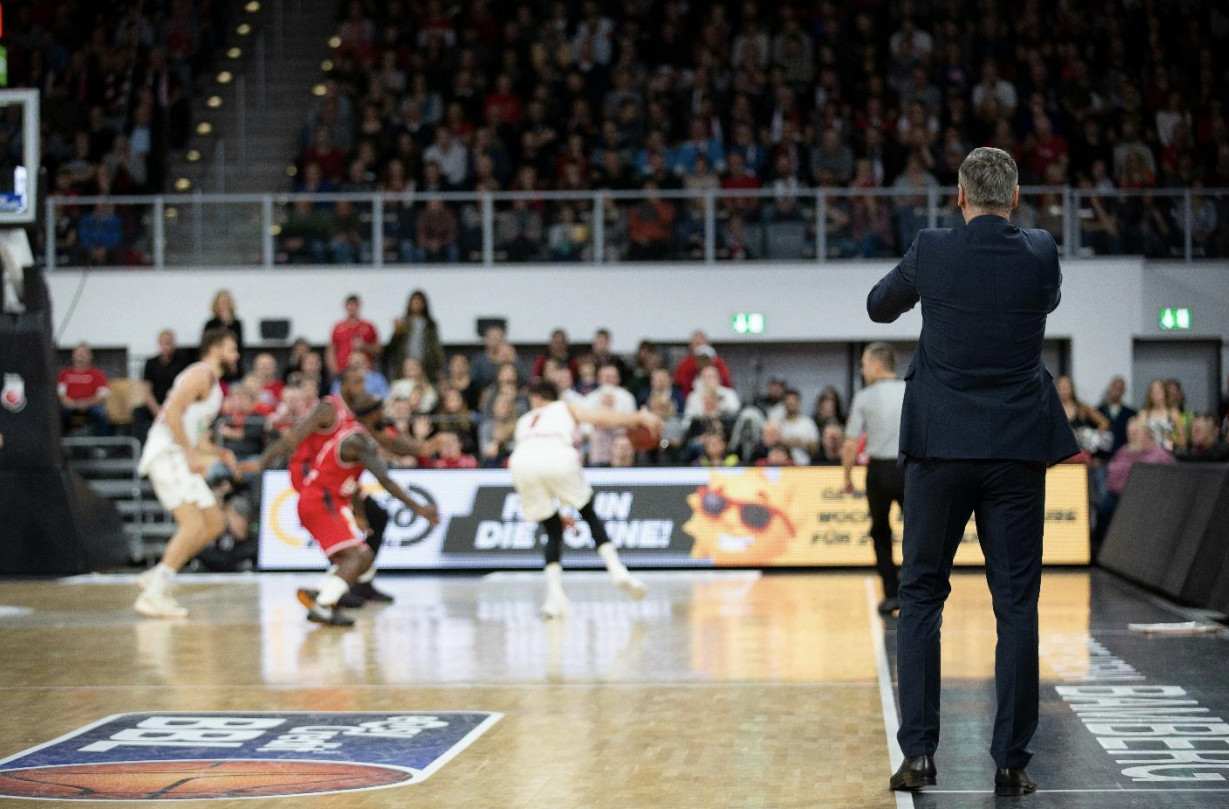
Coaching Has Never Been Just About Playing
There’s a common assumption that you need to have played the game to teach it. But think about what coaching actually involves on a daily basis: organizing practices, communicating expectations, managing egos, preparing for opponents, and keeping a group of individuals pointed in the same direction. None of that requires a roster spot.
The coaches who last are the ones who can teach, adjust, and connect. Those qualities come from work, not from having played four years of college ball.
Study the Game With Intention
If your playing background is limited, you have to be more deliberate about how you learn. Watching games casually isn’t enough — you have to watch with a specific focus. How does a team defend the pick-and-roll? How does a coach use timeouts to interrupt momentum? What adjustments does a staff make at halftime when the first-half plan isn’t working?
YouTube has made tactical education more accessible than ever. Film breakdowns, coaching clinic recordings, and play design channels can teach you concepts that used to require being in a locker room to absorb. Books and interviews from coaches like Mike Krzyzewski, Pat Summitt, and Phil Jackson go beyond X’s and O’s — they get into leadership philosophy, team culture, and how to handle adversity.
That’s the kind of material that shapes a coaching identity.
Get Certified
Certifications won’t replace experience, but they establish credibility — especially when you’re just starting out and don’t have a playing résumé to lean on. USA Basketball and FIBA both offer structured coaching education programs covering player development, defensive principles, and practice organization.
Clinics run by organizations like the National Association of Basketball Coaches are worth attending for both the content and the connections. Being in a room with experienced coaches accelerates your learning in ways that self-study alone doesn’t.
A background in Sports Science, Physical Education, or Sports Management also helps, particularly if you’re aiming toward school or collegiate programs where formal qualifications carry more weight.
Start Somewhere Practical
There’s no substitute for being in a gym and actually coaching. Volunteer with youth leagues. Help out at local schools. Assist with basketball camps over the summer. These aren’t glamorous opportunities, but they’re where you learn how to run a drill, how to correct a player without deflating them, and how to keep a practice moving when things go sideways.
A lot of coaches also come up through behind-the-scenes roles — team managers, video coordinators, player development assistants. Those positions put you inside the operation. You see how decisions get made, how game plans get built, and how good coaching staffs communicate. That kind of proximity is valuable.
Lean Into What You’re Actually Good At
Not having a playing background forces you to find other ways to contribute. Lean into them.
Video analysis has become central to how teams at every level prepare. If you develop a real ability to break down film — to identify tendencies, track spacing, spot patterns — you become useful to a coaching staff fast. The same goes for recruiting support, strength-and-conditioning coordination, or simply being someone players genuinely trust.
Modern basketball organizations are looking for people who strengthen the staff. Your path in might not be the traditional one, but that doesn’t make it a lesser one.
Stay Close to the Game
Keep watching. Keep reading. Follow how the game is evolving at the professional level and how those changes filter down to the college and high school game. Coaches who stay current — who understand the trends in spacing, position-less lineups, and defensive switching schemes — bring more value than those who stop learning once they land a role.
For those who engage with basketball analytically, markets on the best online basketball betting site offer another lens on team form, matchup dynamics, and situational tendencies — an underrated way to sharpen your reading of the game.
Confidence Comes From Preparation, Not Résumé
The players and assistants you work with will eventually figure out whether you know what you’re talking about. That process happens faster if you walk in prepared. Not perfect — prepared. Knowing your practice plan cold. Having answers ready. Being honest when you don’t.
Confidence built that way is durable. It doesn’t depend on being able to say you played at a certain level. It comes from showing up consistently and doing the work.
Pros & Cons of Becoming a Basketball Coach Without Playing Experience
| Pros | Cons |
|---|---|
| You can build a coaching career based on knowledge, preparation, and leadership rather than an athletic background. | You may need to work harder to earn initial credibility from players, parents, or staff. |
| Studying the game from a coach’s perspective can give you a strong tactical and analytical foundation. | Lack of personal playing experience can make it harder to relate to certain players’ challenges at first. |
| Opportunities exist at many levels (youth, school, amateur), allowing you to gain experience gradually. | You might have to start in unpaid or low-pay roles to gain experience. |
| Certifications and education can help you progress even without a playing résumé. | Some organizations prefer hiring coaches with competitive playing backgrounds. |
| Fresh perspectives can lead to creative coaching styles and new approaches. | You’ll need to invest significant time in learning fundamentals and strategy. |
The Path Exists
Becoming a basketball coach without competitive playing experience is harder than having that background. There’s no point pretending otherwise. But harder isn’t the same as impossible, and the gap closes quickly once you start accumulating real knowledge and real reps.
The game rewards people who are genuinely committed to understanding it. If that’s you, the playing career you didn’t have won’t be what defines you.
Frequently Asked Questions
Latest Tips
Los Angeles Thieves vs FaZe Vegas
This is a major early test in the Stage 4 Major Qualifiers for this season of professional Call of Duty, with both teams near the top of the 2026 CDL table. FaZe Vegas are listed second overall on 355...
Read More
South Korea vs Japan
The Group A bo3 clash between South Korea and Japan is one of the headline matches of the Overwatch World Cup 2026 - Asia Conference stage. The tournament is a regional online qualifier that determine...
Read MorePakistan vs Australia
The opening 2026 One Day International (ODI) between Pakistan and Australia sets the tone for a three-match series running from May 30 to June 4, 2026. The 1st ODI is scheduled for May 30, 2026, at Ra...
Read MoreParis Saint-Germain vs Arsenal
The reigning champion takes on the most formidable challenger of the year. There isn’t a better matchup for practically any men’s football competition final, and this year’s UEFA Champions League fina...
Read MoreLatest News
Entain Pushes for Crackdown on Unlicensed Gambling Sponsorships in English Football
Entain, the global betting and gaming company behind Ladbrokes and Coral, has intensified pressure on English football authorities by urging the newly formed Independent Football Regulator (IFR) to pr...
Read MoreClassic Maps and Gameplay Return: CS: GO Mobile Launch in Progress
For years, the idea of an official mobile version of Counter-Strike felt more like community wishful thinking than a serious possibility. But fresh leaks, datamined files, and growing speculation acro...
Read MoreLast to Qualify, First to Announce Roster: Bosnia and Herzegovina Reveals 2026 World Cup Squad
Bosnia and Herzegovina has officially become the first nation to announce its final 26-man squad for the 2026 FIFA World Cup, with head coach Sergej Barbarez unveiling a roster that mixes veteran lead...
Read MoreFanatics-Owned Trading Card Brand Lands Historic FIFA Collectibles Deal
For decades, FIFA World Cup sticker albums and trading cards were almost synonymous with Panini. That era is now officially coming to an end. FIFA has signed a long-term licensing agreement with Topps...
Read More