Dark Horse Teams to Watch at World Cup 2026

Contents
- Dark Horse Teams to Watch at World Cup 2026
- Why World Cup 2026 Is Perfect for Dark Horses
- What Makes a True Dark Horse?
- Top Dark Horse Teams for World Cup 2026
- Colombia — South America’s Balanced Threat
- Japan — Tactical Discipline at Its Peak
- Senegal — Africa’s Most Complete Contender
- Ecuador — Defensive Machine Built for Knockouts
- Turkey — The Returning Wildcard
- United States — Home Advantage Factor
- Morocco — Can Lightning Strike Twice?
- Potential Emerging Dark Horses
- Key Factors That Could Decide Dark Horse’s Success
- Prediction: Which Dark Horse Could Go the Furthest?
- Pros & Cons of Being a Dark Horse at the World Cup
- Conclusion
- Frequently Asked Questions
 Best Bookmakers for United States





KEY TAKEAWAYS:
- The expanded 48-team format gives disciplined, well-organized sides more paths to the knockout rounds than any previous World Cup — making 2026 the ideal tournament for dark horses.
- Tactical identity and defensive stability matter more than star power in long tournaments; the teams to watch are built on systems, not individuals.
- Japan, Senegal, and Colombia represent the strongest dark horse cases — undervalued in favorites discussions but structurally equipped to reach the quarterfinals or beyond.
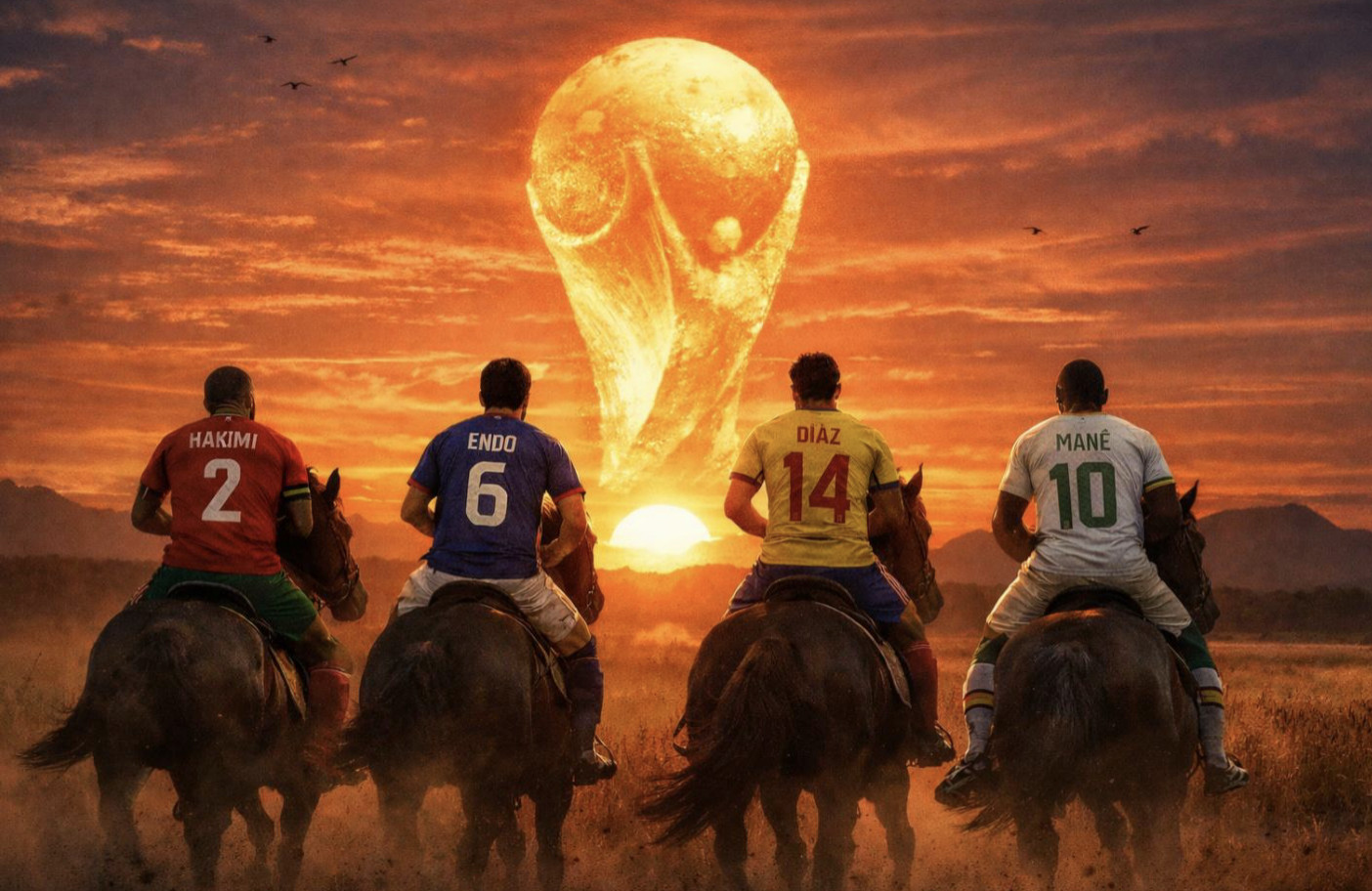
The 2026 edition changes everything. For the first time in history, 48 nations will compete across the United States, Canada, and Mexico. Thirty-two teams advance from the group stage — up from 16 in previous 32-team tournaments. That structural shift doesn’t just expand the bracket; it fundamentally resets the odds for teams operating outside the traditional power hierarchy.
This article identifies the dark horses with the right combination of talent, tactical clarity, and timing to pull off a deep run. A dark horse, as we define it here, is not a minnow hoping for a miracle. It’s a team with genuine structural strengths, flying below the radar of mainstream 2026 FIFA World Cup favorites prediction coverage — capable of going deep when conditions align.
Why World Cup 2026 Is Perfect for Dark Horses
Structure is everything. The expanded 48-team format isn’t just a cosmetic change — it rewires the tournament’s competitive logic from the ground up.
Under the new group stage format, three teams qualify from each group of four. That single adjustment lifts the floor for every underdog. A team no longer needs a perfect record to survive — they just need to avoid finishing last. The margin for error grows, and with it, the confidence of teams built on defensive discipline rather than attacking star power.
The knockout draw adds further volatility. One high-press game, one set-piece goal, one tactical surprise — that’s all it takes to eliminate a favorite who entered as a heavy pre-tournament pick. The longer a tournament runs with more teams, the more randomness creeps in, and the more tactical sophistication becomes the great equalizer.
Travel and climate conditions across three host nations add another variable. Teams that adapt quickly to different environments — altitude in Mexico, heat and humidity in certain US venues, colder conditions in Canada — gain an edge that has nothing to do with squad ranking or market value.
History supports this logic. Croatia reached the 2018 final as a 66-to-1 pre-tournament pick. Morocco made the last four in Qatar with a squad entirely built on collective organization and defensive solidity. Both teams shared a common trait: a clear tactical system that didn’t rely on a single world-class name to carry them through.
In 2026, the conditions for the next great upset story are better than ever before.
What Makes a True Dark Horse?
Not every nation the media overlooks qualifies as a genuine dark horse. There’s a meaningful difference between a team capable of causing an upset in one game and a team capable of sustaining a deep tournament run across six or seven matches against progressively stronger opposition.
The teams worth watching share a specific profile:
- Tactical identity: a clear, repeatable system the squad can execute under pressure without relying on improvisation.
- Defensive stability: Teams that reach semifinals consistently concede fewer goals — the data across every major tournament backs this up.
- Midfield control: The ability to dictate tempo and protect transitions, especially in knockout games decided by fine margins.
- Squad depth: With 2026 requiring more matches than any previous World Cup, rotation quality becomes a competitive weapon.
- Qualifying momentum: A team entering the tournament on a confidence run is different from one that scraped through.
There’s also a market angle worth considering. Some of the teams below are undervalued by bookmakers relative to their actual structural quality — making them worth tracking both as football stories and, for those inclined to research, as bets worth investigating on the best World Cup betting sites before odds shift closer to the tournament.
Top Dark Horse Teams for World Cup 2026
Identifying genuine dark horses requires looking beyond FIFA rankings and squad market values. The seven teams below each have built something more durable than individual talent — a tactical system, a collective identity, and the structural profile to sustain a deep run across six or seven high-stakes matches. They are listed not by ranking but by the completeness of their dark horse case.
Colombia — South America’s Balanced Threat
Colombia enters 2026 as one of the most structurally sound teams in CONMEBOL, without carrying the burden of being the favorite. Their pressing system is cohesive and well-drilled — not built on the brilliance of one forward or the creativity of one midfielder, but on positional discipline that makes them hard to break down and dangerous in transition.
The generational blend is notable. Experienced campaigners anchor a squad enriched by emerging talent coming through at European clubs, giving Colombia the kind of squad depth that matters when a tournament stretches into its second and third weeks.
What makes them genuinely dangerous in a knockout format is their tactical flexibility. They are comfortable absorbing pressure, converting on the counter, or pressing high and forcing errors from teams uncomfortable with build-up. That adaptability — the ability to play a different game depending on the opponent — is a rare quality at the international level.
Colombia has historically performed better in World Cups than its odds suggest. This summer, as a team rarely mentioned in mainstream 2026 FIFA World Cup favorites prediction conversations, they could be the South American team that quietly dismantles expectations.
Japan — Tactical Discipline at Its Peak
Japan is no longer a surprise. They have spent the better part of a decade systematically dismantling the idea that European and South American nations have an automatic edge at the senior level. The 2022 World Cup — where they beat Germany and Spain in the group stage — confirmed what domestic leagues and Asian qualifying had already signaled: this is a team with elite-level tactical organization.
What separates Japan from the flattering group-stage performers of previous tournaments is the depth of European club experience now embedded in the squad. Players competing at Bundesliga, Serie A, and Premier League clubs weekly bring a familiarity with high-intensity pressing systems, defensive transitions, and game management under pressure that simply didn’t exist in earlier generations.
Their system prioritizes collective compactness over individual expression. Pressing triggers are coordinated, defensive shape is maintained under duress, and transitions are fast and purposeful. Against a well-organized opponent, Japan can frustrate and suffocate. Against a disorganized one, they punish quickly.
The ceiling for this squad is a quarterfinal or further — particularly if a favorable bracket section opens up. Japan may be the dark horse that neutralizes a traditional power and goes further than any Asian team in history.
Senegal — Africa’s Most Complete Contender
Calling Senegal a dark horse feels almost like an understatement. They are ranked among the top tier globally, they won the last Africa Cup of Nations, and their squad is packed with players competing at the highest level of European football across every position.
Yet Senegal continues to operate on the margins of 2026 FIFA World Cup favorites discourse — consistently undervalued by markets and pundits who default to familiar European and South American names. That positioning is useful. It means they won’t face the psychological weight of expectation that has historically derailed stronger-on-paper sides.
Their defensive core is experienced and physically formidable. Their athleticism creates problems for European teams that rely on slower build-up play. Their tournament pedigree — having competed in two of the last three World Cups with increasing competence — means they are not overawed by the occasion.
The key factor is the physical intensity they bring. Against South American or European midfield-heavy sides, Senegal’s combination of pressing energy and individual athleticism can disrupt the rhythm those teams depend on. They aren’t a dark horse in the traditional sense — they are a borderline contender being treated like one.
Ecuador — Defensive Machine Built for Knockouts
Ecuador’s rise over the past cycle has been quiet but substantive. They qualified comfortably through CONMEBOL’s notoriously demanding qualifying process, built on a defensive structure that makes them deeply unpleasant to break down in tight, pressure-heavy games.
Their midfield balance is engineered for control rather than flair. They win second balls, they close down transition space quickly, and they are comfortable in the low-scoring physical battles that knockout football often produces. Those characteristics are more valuable in a 90-minute elimination game than the kind of attacking fluency that earns headlines during the group stage.
The honest caveat is that the creative output is limited in the final third. Ecuador wins games by conceding fewer than they score, not by outscoring opponents. That limits the ceiling in games where they fall behind and need to chase. But in a tournament format with 32 teams reaching the knockout round — where margins are razor-thin and disciplined sides have a structural advantage — Ecuador’s style becomes a genuine weapon.
They are a dark horse pick for anyone willing to back defensive pragmatism over attractive football. Turkey’s return to the World Cup after years of absence carries a particular energy. There’s something about a team entering a tournament with accumulated hunger, a renewed sense of purpose, and a point to prove that it tends to produce performances greater than the sum of individual talent. Under current management, Turkey plays a disciplined, pragmatic style — organized defensively, patient in possession, and capable of punishing opponents who assume the game is already won. It’s not spectacular football, but it’s effective tournament football. The squad blend of experienced leaders alongside a talented younger core is the profile that tends to age well across a six-game tournament. Veterans maintain their composure under high pressure, while energetic younger players set the tempo and press effectively. Everything depends on the group draw. A favorable early bracket could allow Turkey to build momentum — and in knockout football, momentum compounds. A round-of-16 run, or potentially a quarterfinal if things break right, is well within reach for a team that most neutrals will underestimate. Co-hosting a World Cup doesn’t automatically create a deep run, but it provides structural advantages that compound over the course of a tournament. The United States will play every possible home game in familiar venues, avoiding the travel fatigue that other nations experience. Crowd energy will be consistently behind them. The psychological dimension of performing in front of a home nation is not trivial. The talent pool is real. Players competing across the Premier League, Bundesliga, and other elite European divisions give the squad a technical foundation that didn’t exist even eight years ago. The so-called golden generation has arrived at major tournaments, and 2026 represents the peak window for this group’s experience curve. The honest question is tactical maturity under knockout pressure. The United States has historically underperformed relative to individual talent in high-stakes elimination games. Whether that inconsistency has been addressed by a more defined system and better game management is the central question around this team’s ceiling. If the answer is yes, they have the crowd, the talent, and the schedule to reach the quarterfinals. The 2022 semifinal run transformed Morocco’s global profile. They can no longer claim the element of surprise that made their Qatar campaign so devastating — opponents will come prepared, motivated, and without the tactical naivety that Belgium and Spain displayed. So, the question is – can they be marked as a dark horse team or a title contender? What Morocco retains is its structural foundation. Their defensive organization is among the best internationally, their counter-attacking threat is lethal in transition, and their collective experience of high-pressure knockout football is now embedded in the squad’s DNA. These aren’t things that evaporate between tournaments. The challenge is sustaining the tactical surprise that was central to 2022. Their defensive block is well-scouted now. Teams will set up specifically to negate the counter and force Morocco into extended possession sequences it’s less comfortable in. Lightning can strike twice — but only if the tactical evolution continues and the squad avoids the regression that often follows unexpected success. Beyond the primary picks, a handful of nations deserve monitoring as the tournament approaches: Even the best-positioned dark horses face variables that can derail a campaign regardless of tactical quality: Narrowing the field to three genuine semifinal candidates: Japan carries the most complete package of tactical sophistication, European club experience, and proven ability to beat elite opponents. Their ceiling is higher than any previous Asian nation at a World Cup — and the structural conditions in 2026 suit their system precisely. Senegal’s combination of world-class individual talent and a coherent collective system makes it arguably a dark horse. They are a threat to any team they face in the bracket. If their tournament coincides with the farewell moments of Sadio Mané-era veterans, expect a deeply motivated squad. Colombia provides the most underrated combination of structural quality and psychological positioning. Not burdened by expectation, not scrutinized in the way Brazil or Argentina are, they can enter every game as the team with less pressure — a meaningful advantage over a long tournament. Bold pick for deepest dark horse run: Japan to the semifinal. Their tactical identity is the most coherent of any non-traditional power, their players are battle-hardened at the club level, and the expanded format creates the bracket conditions that could deliver it. For a full breakdown of outright odds and where the smart money is sitting, check out our analysis of World Cup 2026 winner odds and who to back — including where dark horse value sits versus the established favorites. Being labeled as a dark horse is a double-edged sword. It shields teams from pressure while exposing them to structural disadvantages — here’s how both sides stack up. The 2026 FIFA World Cup is structurally designed to produce surprises. Forty-eight teams, 32 knockout spots, and three host nations spread across a continent create a tournament where adaptability, collective organization, and tactical identity matter more than individual star power or historical pedigree. Every 2026 FIFA World Cup favorites prediction list will feature Brazil, Spain, France, England, Argentina… Those teams deserve the attention — their squads are elite. But the story that defines the tournament will almost certainly come from outside that conversation. Morocco proved in 2022 that structure and belief can dismantle supposedly superior opposition across six games. Japan proved it in the group stage. Croatia proved it across an entire 2018 campaign. The conditions in 2026 are the most favorable for a dark horse deep run in the history of the competition. The question isn’t whether a dark horse will emerge. It’s the team that has quietly built everything it needs to be the next one.
United States — Home Advantage Factor
Morocco — Can Lightning Strike Twice?
Potential Emerging Dark Horses
Key Factors That Could Decide Dark Horse’s Success
Prediction: Which Dark Horse Could Go the Furthest?
Pros & Cons of Being a Dark Horse at the World Cup
Pros Cons No pressure of expectation — players perform more freely Often underseeded in the draw, leading to tougher group opponents Opponents underestimate you, opening the door for tactical surprises Less commercial backing and resources than traditional favorites Low media scrutiny allows focused, undisrupted preparation The label can obscure real quality, hindering long-term talent attraction One big result builds massive momentum across the squad and nation Once an upset happens, the surprise factor is gone — opponents adapt fast Modest progress already exceeds expectations, boosting national morale Exceeding expectations carries its own psychological pressure to keep delivering Conclusion
Frequently Asked Questions
Latest Tips
France vs Italy
The FIVB Men’s Volleyball Nations League (VNL) is one of the most prestigious annual international volleyball competitions, bringing together the world’s top national teams across several weeks of eli...
Read More
Uzbekistan - Colombia
One of the two opening matches in Group K of the 2026 FIFA World Cup between Uzbekistan and Colombia presents a fascinating, high-stakes collision between Asian tactical discipline and South American ...
Read MorePortugal - Congo
The 2026 FIFA World Cup Group K opening match between Portugal and DR Congo represents a massive clash of styles, experience, and footballing history. As you prepare to watch the action unfold, you ca...
Read MoreEngland - Croatia
Few group-stage fixtures at this World Cup carry the emotional and competitive weight of this one. Before diving in, if you want to compare odds and markets from top-rated sportsbooks for this fixture...
Read MoreLatest News
One-time TI champions Tundra Esports End Competitive Operations to Pursue Media-First Future
Tundra Esports has announced one of the most surprising pivots in recent eSports memory, stepping away from competitive gaming entirely and repositioning itself as a media-focused brand. The move come...
Read More1xBet Wins SiGMA Europe Awards for Best Sports Betting Operator in 2026
Global betting operator 1xBet has been crowned Best Sports Betting Operator 2026 at the SiGMA Europe Awards, which took place in Valletta, Malta. The ceremony, held at the historic Casino Maltese, bro...
Read MoreManchester United and Betway Strike Major Sponsorship Deal as Iconic Club’s Commercial Strategy Evolves
Manchester United have agreed a new sponsorship partnership with Betway, marking another significant commercial move for one of football’s most recognizable brands. The agreement adds Betway to United...
Read MoreFIFA World Cup 2026 to Debut Major Rule Changes: VAR Powers Expanded, Time-Wasting Targeted…
The 2026 FIFA World Cup is set to become the testing ground for some of the most significant football law changes in recent years after the International Football Association Board (IFAB) approved a p...
Read More