

How Points Are Scored in Snowboard Big Air – What to Know
Snowboard big air has become one of the Winter Olympics’ most watchable events, partly because it is easy to follow and partly because it rewards nerve as much as skill. At the Milano‑Cortina 2026 Games, the discipline returns to Livigno Snow Park, where riders will take on a high‑impact trick performed off one enormous jump.
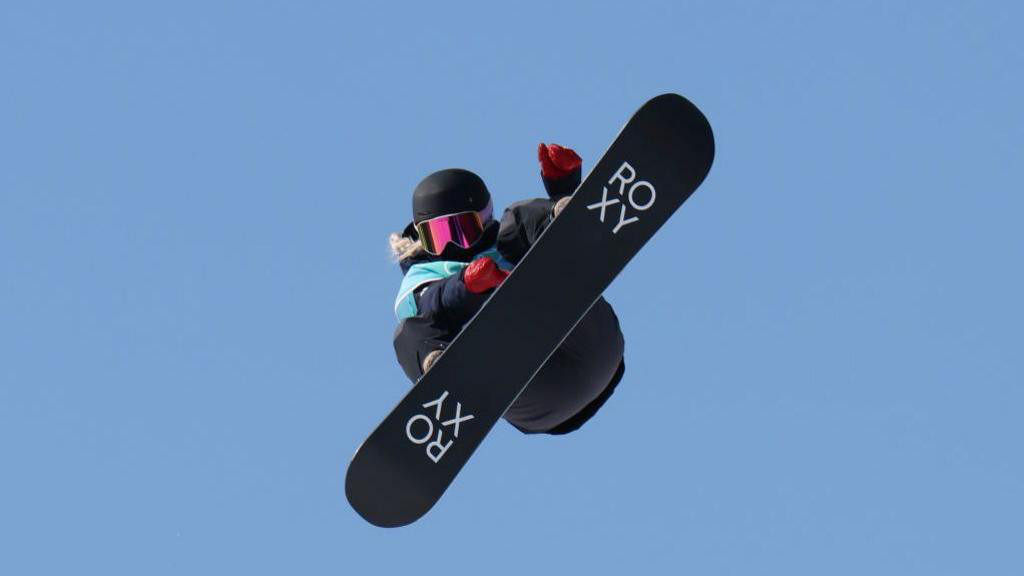
Big air made its Olympic debut in PyeongChang in 2018 and has not changed much in format since. Each athlete is given three runs, but only the best two scores count. Riders are not expected to play it safe on every jump, as the format is designed to encourage progression. That means riskier tricks, and the occasional ‘crash and burn’.
The jump in Livigno stretches 225 metres in total length, rises to a 40‑metre peak, and sits on an average gradient of 28%. Those numbers directly affect how much height and distance riders can generate, which in turn influences how tricks are judged.
How Scoring Works
Scoring is based on four criteria, known collectively as DEAL. The acronym covers difficulty, execution, amplitude, and landing, meaning each jump will be measured across all four of them. Here’s how it breaks down.
- Difficulty rewards complexity. More spins, flips, or off‑axis movement generally means a higher ceiling for points.
- Execution looks at how controlled the trick is, including body position in the air and whether grabs are held cleanly rather than briefly touched.
- Amplitude is about scale. Judges want to see riders use the jump properly, hitting the correct landing zone with enough height and distance to justify the trick attempted. Overshooting or undershooting the landing area can both lead to deductions.
- Landing is when the run ends, and hitting it cleanly is critical. That means rotations (mid-air spins) must be finished before touchdown.
A revert, however, is where the board continues spinning after landing, and is treated as a fall. Most big air tricks are built from combinations of spins, flips, and grabs. Spins rotate horizontally in 180‑degree increments, while flips rotate vertically.
Athletes who qualify for big air also compete in slopestyle, meaning they must adapt quickly between different types of courses.

FAQ
More tips on Olympiad



Andrea Giovannini

Jordan Stolz
Frida Karlsson
Astrid Øyre Slind
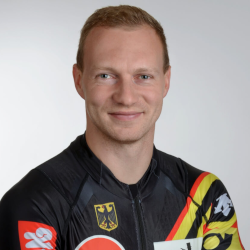
Francesco Friedrich

Johannes Lochner

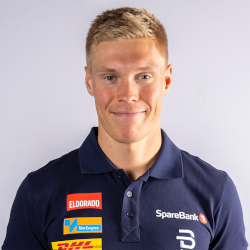
Martin Løwstrøm Nyenget
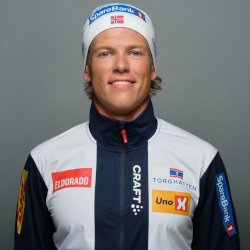
Johannes Høsflot Klæbo