
World Cup 2026 Referee Guide: Who’s in Charge & Cards Markets

Contents
KEY TAKEAWAYS:
- 52 referees across 6 confederations — UEFA and CONMEBOL dominate the pool, with experienced names like Szymon Marciniak and Clément Turpin likely handling the biggest knockout fixtures. Referee assignment is the first thing to check before placing any cards market bet.
- Match context beats averages — The expanded 48-team format means more low-stakes group games, which tend to run cleaner. A winner-takes-all group decider and a dead-rubber opener are completely different propositions in the bookings market, regardless of the teams involved.
- VAR has pushed red cards to historic lows — Just four reds were shown across the entire 2022 tournament. For 2026, faster offside tech may keep the game flowing, but yellow card volume still moves significantly with referee profile, team style, and what’s at stake in the match.
The Officials: Bigger Squad, Wider Spread
FIFA confirmed 52 referees, 88 assistant referees, and 30 video assistant referees for the tournament, which is a significantly larger pool than Qatar. The road to those appointments reportedly began immediately after the 2022 final, with a structured monitoring program that included seminars, continuous assessment, fitness tracking, and medical evaluation. That’s not marketing fluff — it means the officials here have been watched for years, not just selected on recent form.
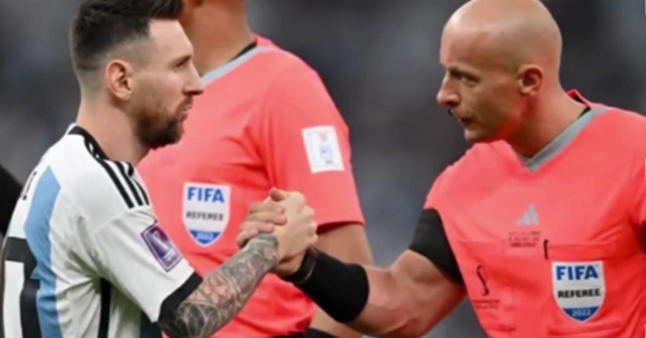
UEFA and CONMEBOL dominate the allocation, contributing 15 and 12 referees, respectively. One of Europe’s representatives is Szymon Marciniak, the Polish official who took charge of the 2022 final between France and Argentina. He’s arguably the most high-profile name on the list and almost certain to handle at least one knockout fixture. From Germany, 44-year-old Felix Zwayer brings extensive experience — on the FIFA list since 2012, plenty of big-stage exposure, though not without controversy in his domestic career.
If you’re actively using the FIFA sports betting sites that cover tournament specials, you’ll want to be checking referee assignments as soon as they drop — good operators update cards, markets, and booking props within hours of the official announcement before each match.
France’s Clément Turpin is another one worth noting. He’s been on the international list since 2010 and handled two matches apiece at the last three European Championships, plus five World Cup games across Qatar and Russia. In other words, a reliable, experienced pick for big matches. Probably not someone who’ll average five yellows a game, but not lenient either.
On the CONCACAF side, Tori Penso from the United States brings MLS experience and an international career dating back to 2021, and she’ll likely be used in group-stage games, as will Canada’s Drew Fischer, who has been on the FIFA list since 2015 and has spent 14 years refereeing in Major League Soccer. Home-tournament officials at a World Cup always attract some scrutiny, fairly or not.
Card Markets and What Actually Moves Them
The World Cup 2026 referee bookings market isn’t just about picking games with high card averages. The match context shapes everything. A group opener between two cautious sides with nothing to lose tends to run cleaner than a winner-takes-all final group game where both teams are fighting for a knockout berth. The format matters here too — with 48 teams and three advancing from each group, there are more low-stakes group matches than the old 32-team setup produced, which could actually push some card averages down early on.
Semi-Automated Offside Technology is being upgraded for 2026, with real-time skeleton tracking and most offside decisions expected within 20 seconds. Faster VAR should, in theory, reduce the kind of drawn-out reviews that previously left players milling around, tempers fraying. Whether that translates into fewer cards is debatable — VAR hasn’t consistently reduced bookings, it’s just changed when and why they come.
One thing worth remembering: two yellow cards in separate matches still result in an automatic one-match suspension at the tournament, and single yellow cards are wiped after the quarter-finals. That’s relevant for player-booking markets — if you’re pricing someone to get booked in the knockouts who’s already been cautioned once, the suspension risk changes the dynamics of how their team might manage their game.
Red cards have been trending down since 2010. In both 2018 and 2022, only four red cards were shown across the entire tournament — partly because VAR catches genuine dismissals and removes the ones that were always borderline. The first red card of the tournament is a niche bet that moves with the referee appointment. Worth a small play on the right game, not something to build a strategy around.
Pros & Cons of Betting on the Cards Markets at the 2026 World Cup
| Pros | Cons |
|---|---|
| 104 matches means more opportunities than any previous tournament — the bookings market runs the full five weeks | Referee-to-match assignments aren’t confirmed until close to kickoff, making pre-match research time-sensitive |
| Referee assignments are public information, giving you a genuine edge if you track card averages properly | VAR has compressed red card frequency significantly — markets built around dismissals carry lower hit rates than they did pre-2018 |
| The 48-team format includes more mismatches, where disciplined favorites against physical underdogs often produce predictable card patterns | Low-stakes group games in a 48-team format can be unusually passive, which deflates expected card counts |
| Single yellows reset after the quarter-finals, keeping player booking markets active deep into the tournament | Settlement rules vary between bookmakers on second yellow/red card scenarios — worth checking before placing |
Who to Watch Going Forward
Marciniak is probably the name to track for semifinal and final appointment speculation — he already handled the Qatar 2022 final, and FIFA clearly rates him. Turpin is another plausible choice for a late-stage game. Both historically run cards at a steady but not extreme rate. For group-stage matches where you want volume — a proper card-fest — look more toward games involving South American teams, where the referee profiles match.
The more granular World Cup 2026 referee bookings market stuff, like first player booked or exact card counts, is really about matching referee tendencies to team styles. A physical, pressing side against a team that holds the ball late tends to produce cards. An open game between two sides without much riding on the result? Less so. Neither analysis nor odds matter much if you’re not paying attention to who’s actually running the line.
This tournament is going to throw up some unusual matches by design — 48 teams means more mismatches, more unfamiliar referee-team combinations, and more group games where the result is essentially academic. The World Cup 2026 referee bookings market will be more active than it’s ever been, and the smart approach is watching the appointments carefully rather than just backing cards in every game and hoping the averages hold.
Frequently Asked Questions
Latest Tips
Mexico vs South Korea
Matchday 2 could prove decisive in Group A. Both Mexico and South Korea opened their World Cup campaigns with victories, placing them level on three points at the top of the group. Mexico defeated Sou...
Read More
Czech Republic vs South Africa
This is already close to a survival game in Group A. Czechia lost their 2026 FIFA World Cup opener 1-2 to South Korea, while South Africa were beaten 0-2 by Mexico after finishing with nine men. That ...
Read MoreIlia Topuria vs Justin Gaethje
This is one of the biggest mixed martial arts (MMA) fights of 2026 and the centerpiece of the historic UFC Freedom 250 event. The card is being staged on the South Lawn of the White House, the residen...
Read MoreBlack Dragons vs Fluxo W7M
The South America League 2026 Stage 1 is the premier regional competition for Rainbow Six Siege teams in South America. Ten teams compete for prize money, circuit points, and qualification opportuniti...
Read MoreLatest News
Curaçao Nets Historic Goal, Emotions Overwhelm Swedish Youngster as He Scores Twice Against His Father’s Homeland
The fourth day of the 2026 FIFA World Cup (Matchday 1) delivered a blend of historical milestones and raw human emotion, proving that the expanded 48-team format belongs on the world stage. In Group E...
Read MoreMorocco Fields First-Ever World Cup Lineup Composed Entirely of Foreign-Born Players
The FIFA World Cup has witnessed countless historic milestones over its nearly century-long existence, but the 2026 tournament just delivered a statistical anomaly that will be remembered forever. Dur...
Read MoreWorld Cup Shuttle Bus Set on Fire as Knicks NBA Title Celebration Descends Into Chaos in New York
New York City’s long-awaited basketball celebration took an unexpected turn overnight as thousands of fans poured into the streets following the New York Knicks’ first NBA championship in more than fi...
Read MoreQatar’s Historic World Cup Point, NYC’s Clash of Heavyweights Ends with Draw
The third day of the 2026 FIFA World Cup will be remembered as a monumental turning point in football history for one side. Image: Qatar players celebrate an equalizer against Switzerland (screensh...
Read More