World Cup 2026 Group of Death: Our Verdict

Contents
- World Cup 2026 Group of Death: Our Verdict
- What Makes a “Group of Death” at the World Cup?
- Group I Overview: Teams, Styles, and Expectations
- France: Still the Benchmark
- Senegal: The Ultimate Tournament Disruptor
- Norway: High Ceiling, High Risk
- Iraq: The Unpredictable Factor
- Key Matches That Will Decide the Group
- Why This Could Be the World Cup 2026 Group of Death
- Betting Angle: Where the Value Might Be
- Pros & Cons of the World Cup Group of Death from a Fan Perspective
- Our Verdict: Who Advances from Group I?
- Frequently Asked Questions
 Best Bookmakers for United States





KEY TAKEAWAYS:
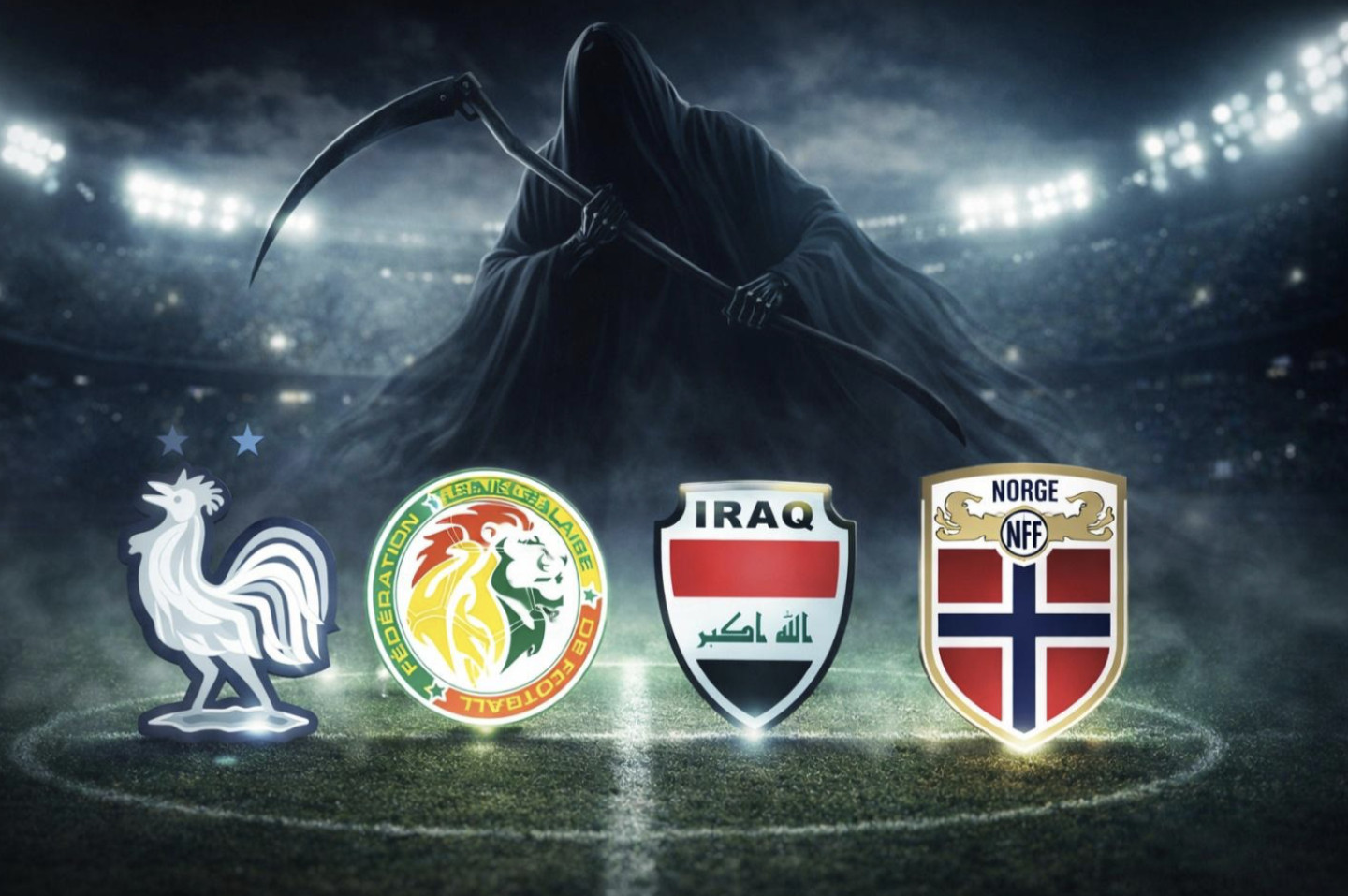
- Group I is genuinely loaded — with France, Senegal, Norway, and Iraq all bringing something dangerous to the table.
- The second qualification spot is wide open.
- Small margins will decide everything — a single goal, a late draw, or an Iraq upset could completely reshape the group standings.
What Makes a “Group of Death” at the World Cup?
The phrase gets thrown around loosely, but a genuine group of death has specific characteristics. First, multiple teams must be realistically capable of advancing—not just one favorite and three fillers. Second, there should be no “free six points” game, where the outcome feels settled before kick-off. Third, and perhaps most importantly, contrasting tactical styles should create matchups where anything can happen.
The expanded 2026 format—48 teams across 16 groups of three—has slightly changed the mathematics, but it hasn’t eliminated the concept. With only two teams advancing directly and a third-place route available, every result carries amplified weight. A single draw in the wrong game can knock out a team with genuine quality.
Group I ticks nearly every box.
Group I Overview: Teams, Styles, and Expectations
Here’s the field:
- France arrives as one of the tournament favorites. Multi-generational talent, elite coaching infrastructure, and a squad that can adapt tactically to almost any opponent.
- Senegal is the reigning African champion (although Morocco won the title on a controversial off-pitch decision by the continental federation) — physical, organized, dangerous on the counter, and capable of grinding out results against far higher-ranked opposition.
- Norway carries the weight of a golden generation that has yet to deliver on the international stage. With Erling Haaland leading the line, they possess the kind of attacking firepower that can embarrass anyone—but their defensive fragility makes every game a coin flip.
- Iraq is the wildcard. Disciplined, hard to break down, and utterly unbothered by reputations, coming from intercontinental qualifications. They won’t win Group I or even be in the top 3, but they could easily cost someone else their place in the next round.
There’s no free lunch in this group. None.
France: Still the Benchmark
France enters every major tournament as a threat to win it all, and 2026 is no different. Their squad depth remains extraordinary—world-class options in almost every position, with a spine of players who have already experienced the pressure of knockout football at the highest level.
What makes France particularly dangerous in a tight group is its tactical flexibility. They can control possession and suffocate teams, or sit deep and punish on the counter. They don’t have one mode—they have several.
The expectation is that “Les Bleus” will top Group I. That’s probably the right call. But expectations bring their own pressure, and in a group this competitive, even a slight underperformance in one game can have cascading consequences for goal difference and qualification scenarios.
Senegal: The Ultimate Tournament Disruptor
If there’s a team in Group I most likely to cause a major upset, it’s Senegal.
They’re physical without being reckless, organized without being passive, and capable of absorbing pressure before exploding in transition. In recent years, Senegal has shown they belong at this level—not as a plucky underdog, but as a team with genuine quality across the pitch.
“Lions of Teranga” tend to be underestimated in pre-tournament analysis. They rarely are by the time the final whistle goes. Their ability to frustrate possession-heavy teams and make the game ugly when needed gives them a realistic path to finishing above any side in this group—including France, on the right day.
Their match against France is, arguably, the defining fixture of Group I. Don’t expect a comfortable afternoon for “Les Bleus.”
Norway: High Ceiling, High Risk
Norway is the most fascinating team in this group. They have arguably the best center-forward in the world. They have pace, directness, and the ability to score in any game. And their defensive record should concern anyone backing them to go deep in the tournament.
The narrative around this Norwegian generation has been building for years—technically gifted players, a manager who trusts attacking football, and finally, a World Cup stage to prove themselves. But international football is unforgiving, and the Scandinavian side’s inconsistencies in big moments have been a recurring issue.
In the context of the World Cup 2026 group of death, “Red, White and Blue” represents volatility. They’ll likely beat someone they shouldn’t, and maybe drop points somewhere they shouldn’t. That unpredictability is precisely what makes this group so hard to forecast.
Iraq: The Unpredictable Factor
Don’t skip past Iraq.
It’s, on paper, the weakest side in Group I. But weak teams at World Cups still have 11 players on the pitch, a defensive structure, and a game plan—and Iraq’s plan is typically to be hard to score against, compact in shape, and ruthlessly efficient on set pieces.
In a three-game group, one disciplined defensive performance from “Lions of Mesopotamia” against a top side can be enough to blow the entire qualification picture apart. They may not take six points—but the points they do take could be the most expensive of the group.
This is exactly the kind of team that defines a group of death. The game nobody should lose, but someone always does.
Key Matches That Will Decide the Group
With no guarantees and margins this fine, the group will likely be decided by a handful of pivotal moments across six games. Goal difference, late winners, and tactical adjustments mid-tournament could all play a role—but these are the fixtures where Group I’s fate gets written.
- France vs Senegal (June 16 – MetLife Stadium, East Rutherford) is the headline fixture—likely the group decider. Both teams will be well-prepared, tactically organized, and wary of the other’s strengths. A draw here could be the result that keeps things alive until the final matchday.
- Norway vs Senegal (June 22 – MetLife Stadium, East Rutherford) has the feel of a battle for second place. Norway’s attacking threat against Senegal’s defensive resilience is a proper tactical puzzle.
- Norway vs France (June 26 – Gillette Stadium, Foxborough) pits controlled European excellence against explosive Scandinavian attacking football. If Norway is still alive in the group at this stage, this game could be extraordinary.
And then there are Iraq’s three games—each one a potential banana skin. One point taken from a top-three side could change the entire group dynamic.
Why This Could Be the World Cup 2026 Group of Death
The argument is straightforward: France is the only genuinely “safe” qualifier, and even that carries caveats. Senegal, Norway, and Iraq all bring something unpredictable to the table.
Three realistic contenders for two spots. Four different tactical philosophies. No guaranteed results. Compare this to groups where one dominant nation faces three teams with minimal World Cup pedigree, and the difference is stark.
Group I rewards the teams that handle pressure across three games—not just one.
Betting Angle: Where the Value Might Be
The unpredictability in Group I creates genuine betting opportunities for those who’ve done their homework. A few markets worth monitoring:
- Group winner — France is odds-on, but Senegal at longer prices represents genuine value if you believe the France vs Senegal match could go either way.
- To qualify — Norway is a high-risk/high-reward option here. If their attack clicks, they have the quality to finish second. If their defense leaks, they could exit at the group stage entirely.
- Points totals — In a group this tight, low-scoring draws are a realistic outcome. Several matches could end in a level.
For the best markets and competitive odds on Group I and the rest of the tournament, check out our guide to the best FIFA World Cup betting sites.
**Please gamble responsibly. 18+.**
Pros & Cons of the World Cup Group of Death from a Fan Perspective
For football fans, a group of death is both a gift and a curse. The drama is unmatched—but so is the anxiety. Here’s the full picture:
| Pros | Cons |
|---|---|
| Every game carries genuine stakes | Your team is never “safe,” even after a win |
| Tactical variety makes for fascinating viewing | Favorite teams can exit earlier than expected |
| Upsets and surprises are far more likely | A single bad result can end a campaign |
| More competitive, high-intensity matches | Less room to rotate or rest key players |
| Neutral fans get the best football early in the tournament | Group stage can feel like a knockout round |
| Storylines and talking points from the very first game | Nervy viewing—not great for the blood pressure |
Our Verdict: Who Advances from Group I?
So, to sum up.
- 1st: France. Their squad depth and experience make them the safest pick to top the group, even in this company. They have too much quality to be knocked out at the group stage.
- 2nd: Senegal. A narrow call over Norway. Senegal’s defensive organization and big-game mentality give it a slight edge in the matches that matter most. They are the most complete team in the group after France.
Norway will be desperate to prove us wrong—and it might. But until they show they can hold a result under pressure, backing them over Senegal feels like the riskier call.
Iraq will make someone’s life very difficult. Watch this space.
Group I is messy, fascinating, and completely unpredictable. That’s exactly what makes it the World Cup 2026 group of death.
Frequently Asked Questions
Latest Tips
France vs Italy
The FIVB Men’s Volleyball Nations League (VNL) is one of the most prestigious annual international volleyball competitions, bringing together the world’s top national teams across several weeks of eli...
Read More
Uzbekistan - Colombia
One of the two opening matches in Group K of the 2026 FIFA World Cup between Uzbekistan and Colombia presents a fascinating, high-stakes collision between Asian tactical discipline and South American ...
Read MorePortugal - Congo
The 2026 FIFA World Cup Group K opening match between Portugal and DR Congo represents a massive clash of styles, experience, and footballing history. As you prepare to watch the action unfold, you ca...
Read MoreEngland - Croatia
Few group-stage fixtures at this World Cup carry the emotional and competitive weight of this one. Before diving in, if you want to compare odds and markets from top-rated sportsbooks for this fixture...
Read MoreLatest News
One-time TI champions Tundra Esports End Competitive Operations to Pursue Media-First Future
Tundra Esports has announced one of the most surprising pivots in recent eSports memory, stepping away from competitive gaming entirely and repositioning itself as a media-focused brand. The move come...
Read More1xBet Wins SiGMA Europe Awards for Best Sports Betting Operator in 2026
Global betting operator 1xBet has been crowned Best Sports Betting Operator 2026 at the SiGMA Europe Awards, which took place in Valletta, Malta. The ceremony, held at the historic Casino Maltese, bro...
Read MoreManchester United and Betway Strike Major Sponsorship Deal as Iconic Club’s Commercial Strategy Evolves
Manchester United have agreed a new sponsorship partnership with Betway, marking another significant commercial move for one of football’s most recognizable brands. The agreement adds Betway to United...
Read MoreFIFA World Cup 2026 to Debut Major Rule Changes: VAR Powers Expanded, Time-Wasting Targeted…
The 2026 FIFA World Cup is set to become the testing ground for some of the most significant football law changes in recent years after the International Football Association Board (IFAB) approved a p...
Read More