Top 5 Dota 2 Tournaments to Watch and Follow in 2026

Contents
- Top 5 Dota 2 Tournaments to Watch and Follow in 2026
- 1. The International 2026 (August 13–23) – Shanghai
- 2. Esports World Cup 2026 (July 6–18) – Riyadh
- 3. ESL One Birmingham 2026 (March 22–29) – Birmingham
- 4. BLAST Slam Series (VI–IX, February to November) – Various European Locations
- 5. Esports Nations Cup 2026 (November 2–8) – Riyadh
- Why 2026 Isn’t Just Another Season
- Pros and Cons of the 2026 Dota 2 Tournament Structure
- Summing Up
- Frequently Asked Questions
Best Bookmakers for United States





KEY TAKEAWAYS:
- 2026 isn’t centered around one event alone — it’s a season of sustained, high-stakes competition from February through November.
- The International remains the ultimate legacy-defining tournament, but massive mid-year prize pools and recurring circuits are reshaping competitive momentum.
- With new formats like the national-team competition entering the scene, 2026 could quietly redefine how Dota 2’s global ecosystem evolves.
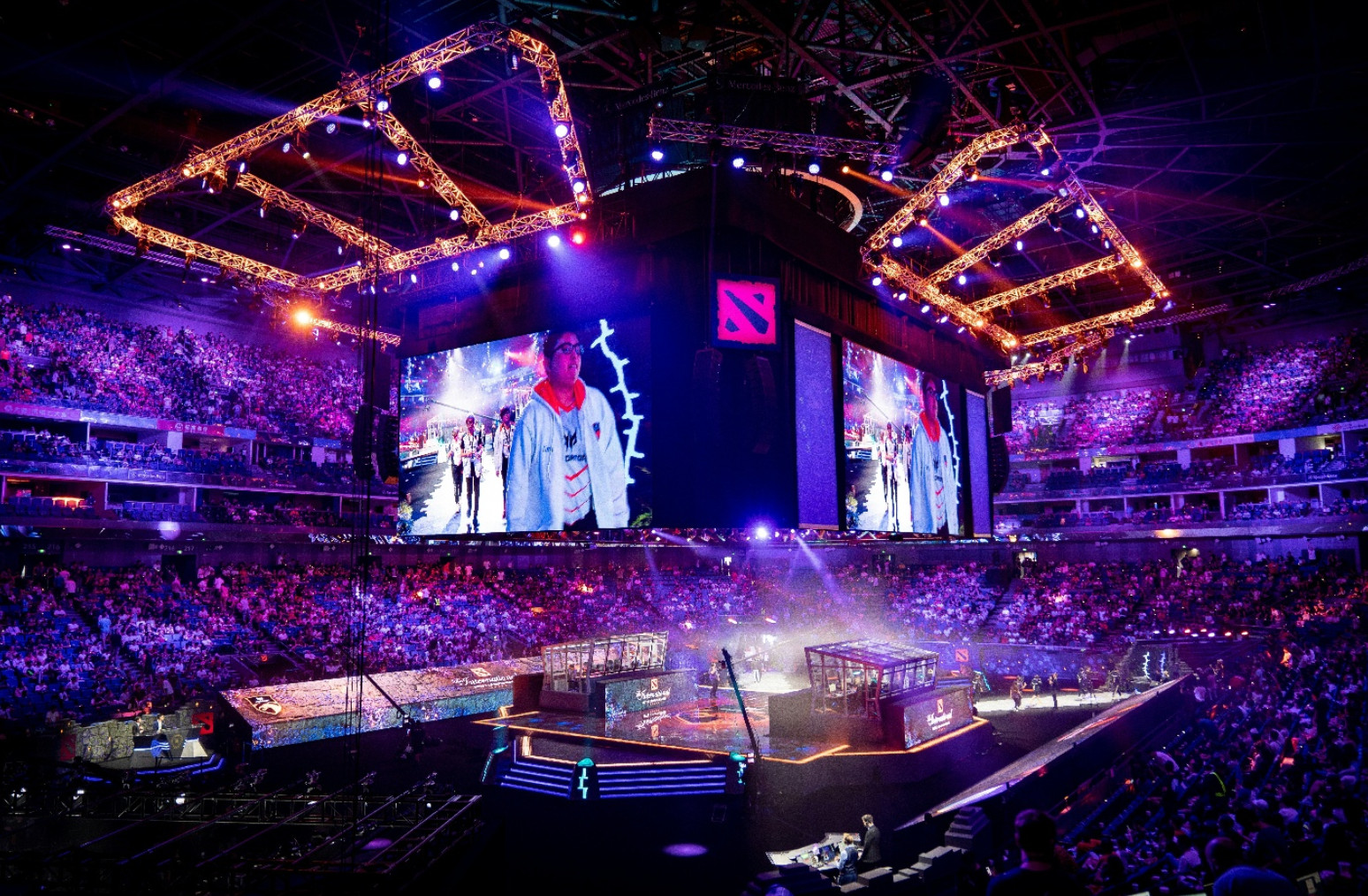
Some Dota 2 seasons feel predictable. Others feel like experiments.
2026 feels like pressure.
Not just because of prize pools — though those are strong again — but because of how tightly packed the calendar is with events that actually matter. There’s no long stretch where elite teams can disappear. No quiet months where the scene resets. If you want to follow Dota seriously this year, you’ll be busy.
What makes 2026 especially interesting is the mix. You have the historical pillar event everyone builds toward. You have a mid-summer mega tournament that’s financially enormous. You have recurring million-dollar circuits quietly shaping rivalries. And then, almost as a curveball, a brand-new national-team competition entering the picture.
For fans, that means non-stop high-level Dota. For analysts, it means constant meta evolution. And for those who follow the competitive side through regulated eSports bookmakers, it means liquidity and serious markets across nearly the entire year — especially during LAN playoffs where drafts, momentum swings, and map betting can flip quickly.
Here are the five tournaments that will define how 2026 is remembered.
1. The International 2026 (August 13–23) – Shanghai
There’s always a debate about whether Dota 2 has changed too much or not enough. But when The International comes around, the conversation resets.
TI is still the measuring stick.
This year marks the 15th anniversary edition, hosted in Shanghai. That detail alone carries weight. China isn’t just another stop on the circuit; it’s one of the historical cores of competitive Dota. Hosting TI there adds narrative tension, especially if a Chinese roster looks competitive heading into August.
Sixteen teams will compete for the Aegis of Champions. The starting prize pool is set at $1.6 million, but the real currency at TI has never been money. It’s legacy.
By the time August arrives, the meta is usually sharp. There are no surprises left in the obvious hero pool. Drafts become chess matches. Coaches matter. Fifth-position warding patterns matter. One misplaced buyback can decide a lower-bracket run.
What makes TI different from every other tournament on this list is psychological weight. Players don’t just lose a series — they carry it for years. Careers get defined here. So do collapses.
If one event still sits above the rest in 2026, it’s this one.
2. Esports World Cup 2026 (July 6–18) – Riyadh
The Esports World Cup isn’t trying to compete with TI emotionally. It’s competing financially.
With a $2 million prize pool for Dota 2 alone, this mid-summer LAN in Saudi Arabia has become one of the richest non-TI events in the ecosystem. And because it happens just weeks before The International, it creates a fascinating dilemma.
Do teams reveal everything?
Or do they hold something back?
Some rosters treat this event like a rehearsal for August. Others go all-in, aiming to dominate and send a message. The result is a strange mix of peak performance and hidden strategies.
Production-wise, the scale is hard to ignore. Riyadh has invested heavily in stage design, lighting, and global broadcast reach. This isn’t a modest LAN — it’s polished, cinematic, and clearly positioned as a centerpiece event.
Momentum matters here. The team that wins in July instantly becomes a betting favorite for TI, whether that’s justified or not. Narratives build fast. Expectations build faster.
And sometimes, the pressure that follows a World Cup win becomes heavier than the trophy itself.
3. ESL One Birmingham 2026 (March 22–29) – Birmingham
If TI is the climax and the Esports World Cup is the spectacle, ESL One Birmingham is the early truth serum.
Spring LANs tend to expose things.
With 16 teams competing for $1 million and valuable ESL Pro Tour points, this event isn’t about hype — it’s about positioning. Rosters are still stabilizing in March. New signings are integrating. Coaches are testing systems. You see strengths, but you also see cracks.
That’s what makes Birmingham compelling.
Unlike late-season events where teams are polished, this one often feels raw. Draft experiments show up. Risky strategies sneak through. Sometimes a dark horse makes a run simply because others aren’t fully synced yet.
The UK crowd usually delivers strong energy, especially for Western teams, but ESL events have historically produced international parity. No region consistently “owns” Birmingham.
By the time this tournament at bp pulse LIVE ends, we usually have a clearer idea of who’s actually built to last the season — and who just looked good on paper.
4. BLAST Slam Series (VI–IX, February to November) – Various European Locations
Not every storyline in Dota 2 is built around a single trophy. Some develop slowly.
That’s what makes the BLAST Slam series interesting.
Four installments spread across the year — each carrying a $1 million prize pool — create something rare in eSports: continuity. Teams meet repeatedly. Adjustments become visible. Rivalries feel earned rather than random.
Team Liquid’s victory at BLAST Slam VI in February set an early benchmark. But that’s the thing about recurring circuits — winning once isn’t enough. You’re tested again. And again.
Because these events are spaced out, they reflect progression. You can track how a roster evolves from winter to autumn. You can see whether early success was sustainable or patch-dependent.
The prize distribution model has also been praised for being fair, which helps maintain competitive depth. Mid-tier teams have an incentive. Favorites can’t afford complacency.
Over time, the BLAST series might quietly shape 2026 more than any single tournament outside TI.
5. Esports Nations Cup 2026 (November 2–8) – Riyadh
This is the wildcard.
The Esports Nations Cup introduces a national-team format to a scene traditionally built around organizations. That changes the dynamics immediately.
Club chemistry is developed over months — sometimes years. National teams, by contrast, bring together top players who may not have shared a server before. That can create brilliance or instability.
There’s also a different kind of pressure attached to playing under a country’s banner. Pride becomes part of the equation. So does scrutiny.
Scheduled in November, the Nations Cup feels like a season epilogue. After months of club-based competition, fans get to see how elite players perform in new combinations. Sometimes those combinations expose unexpected synergy. Sometimes they highlight how important established systems really are.
As a new addition to the circuit, expectations are high. If the format works, it could become permanent. If it struggles, it may remain a one-off experiment.
Either way, it will be watched closely.
Why 2026 Isn’t Just Another Season
It would be easy to say the calendar is simply “stacked.” But that doesn’t fully explain it.
What stands out is how little downtime there is between meaningful events. February sets a tone. March tests stability. July raises financial stakes. August defines legacies. November experiments with format.
There’s almost no room for prolonged slumps.
Teams that want to dominate 2026 will need more than mechanical skill. They’ll need depth. Adaptability. Emotional resilience. The ability to reset quickly after losses.
From a viewer’s perspective, that makes the season more engaging. You’re not waiting months for something important to happen. It keeps happening.
Pros and Cons of the 2026 Dota 2 Tournament Structure
The 2026 Dota 2 competitive calendar introduces a dense, high-stakes structure featuring multiple million-dollar LAN events, a legacy championship, and a new national-team format. While this creates year-round excitement and financial stability, it also increases pressure on teams and reduces recovery time between major competitions. Below is a balanced overview of the key advantages and potential drawbacks of this evolving tournament ecosystem.
| Pros | Cons |
|---|---|
| Consistent million-dollar prize pools improve financial stability for teams. | Tight scheduling increases burnout risk for players and staff. |
| Global LAN distribution strengthens international fan engagement. | Frequent meta shifts reduce preparation time between events. |
| Recurring circuits (e.g., seasonal series) build long-term rivalries. | Top teams face constant performance pressure with little downtime. |
| Multiple peak events reduce overreliance on a single championship. | Travel-heavy calendar may impact consistency. |
| New national-team format expands audience appeal. | New formats may struggle with team chemistry or competitive balance. |
Summing Up
If you’re trying to follow Dota 2 casually in 2026, you can pick one or two of these tournaments and still enjoy elite competition.
But if you want to understand the season — really understand it — you’ll need to watch how these events connect.
How Birmingham results influence summer expectations.
How the Esports World Cup reshapes TI narratives.
How BLAST rivalries spill into international championships.
How national-team experiments reveal hidden strengths.
This isn’t a year built around a single spotlight. It’s a year built around sustained pressure.
And in Dota 2, pressure reveals everything.
Frequently Asked Questions
Latest Tips
Karmine Corp vs Team Vitality Prediction on March 28, 2026
The Karmine Corp vs Team Vitality match for the LEC 2026 Spring matters right away, as it’s one of the two League of Legends EMEA Championship splits that sends teams to MSI, with the two Spring fin...
Read More
ENTER FORCE.36 vs ONIC Rise Prediction on March 28, 2026
The matchup between ENTER FORCE.36 and ONIC Rise marks a high-stakes opening (upper bracket round 1) for the Pokémon UNITE Asia Champions League 2026 finals. For fans looking to back their favorite ...
Read MoreItaly vs Northern Ireland Prediction on March 26, 2026
This is a men’s football single-leg Path A semi-final (listed as semi-final 1) in UEFA’s second round of the 2026 FIFA World Cup qualification, i.e., the playoffs. The winner advances to the Path A ...
Read MoreArizona vs Arkansas Prediction on March 26, 2026
The 2026 NCAA Division I men’s basketball tournament matchup between the Arizona Wildcats and the Arkansas Razorbacks brings together two of college basketball’s most explosive programs. For fans lo...
Read MoreLatest News
Formula 1 Enters Betting Era with Betway Partnership Ahead of 2026 Season
Formula 1 is stepping into a new phase of its global growth, announcing Betway as the sport’s first-ever official betting operator in a multi-year deal starting from the 2026 season. The agreement sig...
Read MoreDraftKings Rolls Out “Super App” – Unified Platform for Changing Sports Betting
DraftKings has introduced a new all-in-one “super app,” aiming to bring together its sportsbook, casino, and digital offerings under a single, streamlined platform. The move comes at a pivotal moment ...
Read MoreSenegal Stripped of African Title as Morocco Crowned – Twist Coming Right Up
The 2025 Africa Cup of Nations has taken a dramatic and unprecedented turn, with Senegal officially stripped of its title and Morocco declared champions following a ruling by the Confederation of Afri...
Read MoreUFC and bet365 Strike Landmark Sports Betting Partnership in U.S. and Canada
The Ultimate Fighting Championship (UFC) has announced a major new partnership with global sportsbook bet365, marking a significant shift in the sports betting landscape surrounding mixed martial arts...
Read More