
Milano-Cortina 2026: A Winter We’ll Never Forget

Contents
- Milano-Cortina 2026: A Winter We’ll Never Forget
- A Ceremony That Set the Emotional Tone
- By the Numbers: The Scale of Milano-Cortina 2026
- Norway’s Golden Benchmark
- Johannes “Superman” Klæbo: Expanding a Dynasty
- Jordan Stolz: The Ice Belongs to Him
- Mikaela Shiffrin’s Redemption Arc
- USA Men’s Ice Hockey: A Golden Statement
- Brazil’s First Winter Olympic Medal
- Ski Mountaineering: A New Olympic Frontier
- Historical Positioning: Where Milano-Cortina Ranks
- A Closing That Felt Personal
- Pros and Cons of Milano-Cortina 2026
- Final Reflection
- Frequently Asked Questions
Best Bookmakers for United States





KEY TAKEAWAYS:
- Norway proved the traditional powers aren’t going anywhere, yet Brazil’s breakthrough showed the Winter Olympics are becoming more global than ever.
- From Johannes Klæbo reinforcing his legacy to Jordan Stolz announcing a new era, Milano-Cortina felt like a handover moment between icons and the next wave.
- With ski mountaineering’s debut and athlete-driven narratives, these Games showed the Winter Olympics can modernize while staying true to their mountain roots.
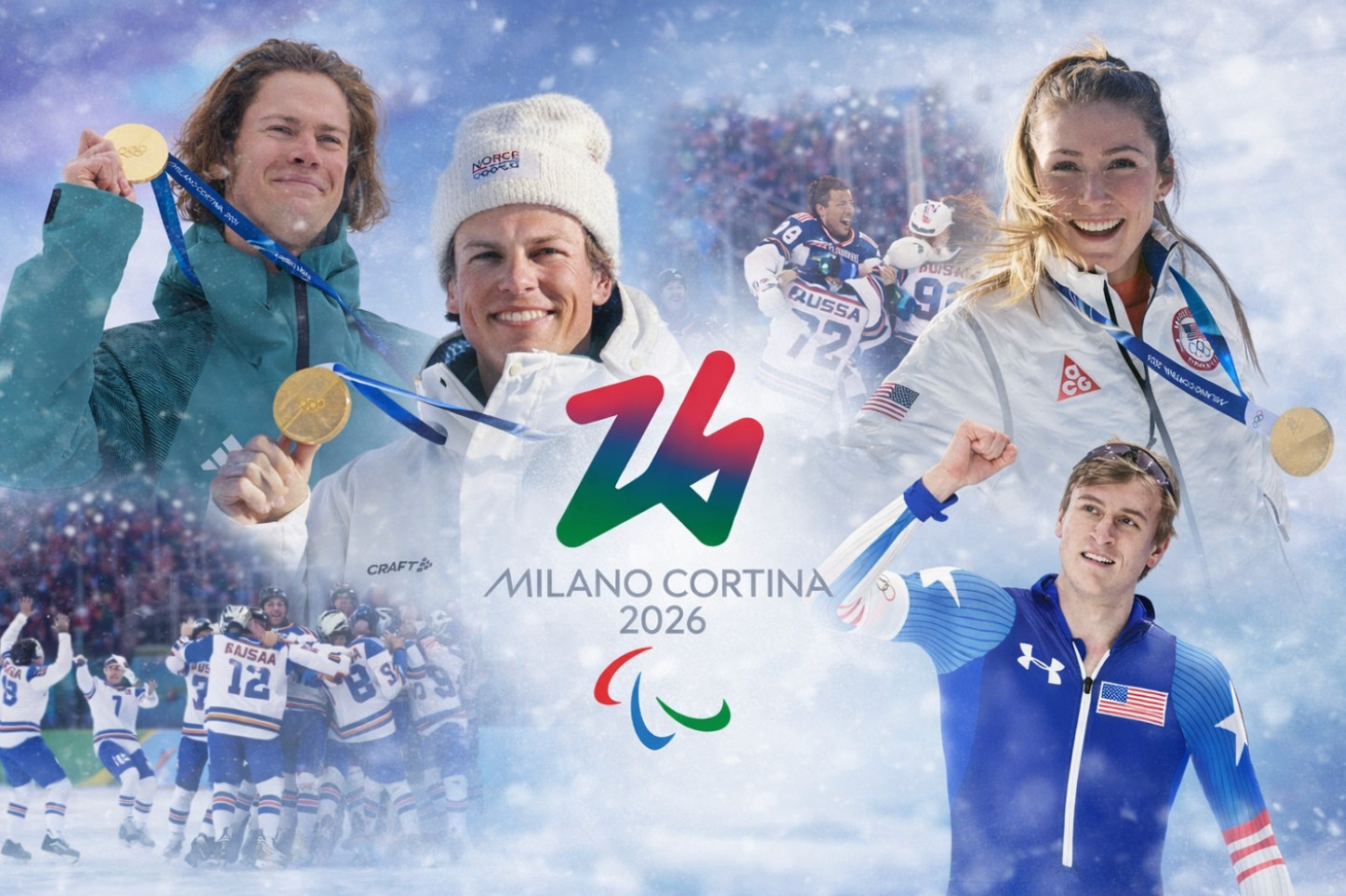
Milano-Cortina 2026 wasn’t just another Winter Olympics on the calendar. It felt different from the start — and by the time the flame went out, it was clear we had witnessed something special.
Yes, there were records. Yes, there were historic firsts. And yes, ski mountaineering officially joined the Olympic program. But reducing these Games to bullet points misses the point. What made Milano-Cortina unforgettable wasn’t just what happened — it was how it happened.
Italy provided the stage, and the athletes took over from there. Norway stacked up gold medals at a pace that felt almost routine. Brazil stood on a Winter Olympic podium for the first time ever. Mikaela Shiffrin rewrote her Olympic story. A new generation, led by names like Jordan Stolz, showed that the next decade has already arrived.
And through it all, the Games kept surprising us.
Even for those who approached Milano-Cortina analytically — tracking medal tables, studying trends, or scanning projections across the top 10 best betting sites — the unpredictability never disappeared. Favorites delivered. Underdogs broke through. Momentum shifted overnight.
That’s the magic of the Winter Olympics. On paper, it’s numbers and probabilities. On snow and ice, it’s pressure, nerves, redemption, and moments that can’t be scripted.
Milano-Cortina 2026 reminded us why we still stop what we’re doing every four years to watch.
A Ceremony That Set the Emotional Tone
Italy opened the Games with a ceremony rooted in culture and contrast — modern Milan energy meeting the alpine heritage of Cortina d’Ampezzo. The production emphasized mountains, innovation, and resilience rather than excess. It felt intentional.
The symbolism mattered.
These Games were geographically split yet thematically unified. Tradition met evolution. Heritage embraced expansion.
What followed over the next 17 days lived up to that promise.
By the Numbers: The Scale of Milano-Cortina 2026
Milano-Cortina 2026 featured:
- 100+ medal events
- 16 Olympic disciplines
- 90+ participating nations
- 2,900+ athletes
The program included alpine skiing, cross-country skiing, biathlon, ski jumping, Nordic combined, speed skating, short track, figure skating, snowboarding, freestyle skiing, skeleton, bobsleigh, luge, curling, ice hockey, and the debut discipline — ski mountaineering.
Participation breadth was among the widest in Winter Olympic history. The medal table, however, told a more familiar story at the top — with a dominant force emerging once again.
Norway’s Golden Benchmark
Norway set a new record for the most gold medals at a single Winter Olympics: 18.
This wasn’t a surge. It was confirmation.
Across cross-country skiing, biathlon, alpine events, and more, Norway’s system once again proved superior. The depth was remarkable — multiple athletes reached the podium across disciplines, rather than relying on a single superstar; although, they didn’t lack that, either (read below).
From a structural standpoint, Norway’s dominance appears sustainable. Their development pipeline, sports science integration, and winter culture continue to produce championship-ready athletes.
Milano-Cortina didn’t just reinforce Norway’s place atop the medal table. It strengthened their long-term claim as the defining winter sports nation of this era.
Johannes “Superman” Klæbo: Expanding a Dynasty
At the center of Norway’s golden surge was Johannes Høsflot Klæbo.
Already one of the most decorated cross-country skiers of his generation, Klæbo added multiple Olympic medals in Italy, further solidifying his place among the sport’s all-time greats. The “Superman” from Scandinavia accounted for six golds on his own – more than all but seven other countries at this year’s Games – most for an athlete at a single Winter Olympics (Michael Phelps holds an overall Olympic record at 23 golds won in Summer Games).
What separates Klæbo statistically is efficiency. His conversion rate in championship settings remains extraordinary. Sprint or distance, tactical or aggressive, he adapts.
Milano-Cortina wasn’t about proving himself. It was about extending an era.
Jordan Stolz: The Ice Belongs to Him
In speed skating, Jordan Stolz announced that the next decade may belong to him.
Winning across sprint distances requires rare versatility. The US athlete combined technical precision with explosive acceleration, earning multiple medals and demonstrating maturity beyond his years.
Very few skaters under 22 have produced comparable Olympic multi-event success. His performances in Italy felt less like a breakthrough and more like the beginning of sustained dominance.
Stolz was so close to becoming the first man in three decades to win three gold medals in long-track speedskating. He stopped at two.
Mikaela Shiffrin’s Redemption Arc
For Mikaela Shiffrin, these Games were personal.
After previous Olympic disappointments in Beijing, where she remained medal-less and under intense scrutiny, Milano-Cortina offered an opportunity for recalibration. And she delivered her third Olympic medal.
The runs from the USA competitor were technically sharp and emotionally controlled. Rather than chasing perfection, she skied with balance and precision — reclaiming her Olympic narrative in the process.
With multiple Olympic medals across her career, Shiffrin now stands firmly among alpine skiing’s most decorated athletes. Only two skiers in history – Kjetil André Aamodt and Janica Kostelić – have won more golds than Shiffrin.
Italy added another chapter to that legacy — one defined by resilience.
USA Men’s Ice Hockey: A Golden Statement
When Team USA met Canada for gold, it was more than a matchup. It was history, rivalry, pride, and pressure all wrapped into sixty minutes of hockey. And this time, the Americans didn’t blink.
They didn’t overwhelm with chaos or hero-ball moments. They played smart. Structured. Patient. They closed down space, made life difficult in the neutral zone, and waited for their chances. When those chances came, they finished (2-1, overtime).
What stood out most wasn’t just the skill — it was the calm. Even late in the game, with everything on the line, there was no panic. Just trust the system and each other.
They went unbeaten through the tournament.
They controlled tempo when it mattered most.
And when the pressure peaked, they delivered.
That’s what made it special.
Olympic hockey always hits differently when the best players are wearing national jerseys instead of club colors. Milano-Cortina reminded us of that. When the USA and Canada meet for gold, it’s not just a game — it’s an event. And this time, it belonged to the Americans.
For the United States, this gold reestablished authority and injected renewed prestige into Olympic hockey, ending a 46-year wait for a gold medal (since the legendary “Miracle on Ice” in Lake Placid 1980).
Brazil’s First Winter Olympic Medal
Perhaps the most symbolic milestone of Milano-Cortina 2026 came from outside traditional winter powerhouses.
Brazil (and the entire Latin America) secured its first-ever Winter Olympic medal. Lucas Pinheiro Braathen, born in Norway and representing this nation until three years ago, triumphed in the men’s giant slalom under the Brazilian flag.
For decades, the Winter Olympics have largely been dominated by countries where snow is part of everyday life. That’s what made this breakthrough feel so significant.
It wasn’t just about one medal. It was about doors opening.
More athletes from non-traditional winter nations now have access to better facilities, international coaching, and year-round training environments. Winter sports are no longer limited to geography — they’re becoming about opportunity and investment.
What happened here wasn’t random. It was the result of years of quiet progress, smarter funding, and global collaboration.
And in Milano-Cortina, that progress finally showed up on the podium.
It also broadens the psychological horizon for emerging nations. Milano-Cortina may be remembered as the Games where winter sports’ geography shifted meaningfully.
Ski Mountaineering: A New Olympic Frontier
One of the freshest additions in Milano-Cortina was ski mountaineering — or simply “skimo” to those who live and breathe it.
If you’re used to watching downhill skiing, skimo feels like a different world. There’s no lift to the top. Athletes climb under their own power, skins attached to their skis, grinding uphill before launching into fast, technical descents. It’s exhausting to watch — and even harder to do.
This isn’t a polished arena sport. It comes straight from mountain culture. It’s raw. It’s tactical. And it demands both endurance and nerve.
Its Olympic debut didn’t just add a few medal events to the schedule. It changed the rhythm of the Games. Suddenly, there was a discipline that looked less like a broadcast production and more like something born in the backcountry.
By bringing skimo into the program, the IOC showed that the Winter Olympics can still grow without losing their roots. Not every new sport needs flashing lights and urban flair. Sometimes, evolution means going back to the mountains.
Historical Positioning: Where Milano-Cortina Ranks
Looking back at Milano-Cortina 2026, certain images will stick.
Norway piling up gold medals like it was business as usual.
Johannes Klæbo adding another layer to a career that’s already historic.
Jordan Stolz skating like the future had arrived early.
Mikaela Shiffrin answering every doubt in the only way that matters — on the slopes.
USA lifting hockey gold in a rivalry that never disappoints.
Brazil stepping onto a Winter Olympic podium for the very first time.
And ski mountaineering carving out its place in Olympic history.
What made these Games interesting wasn’t just who won — it was the mix. At the very top, there was dominance. Norway proved that again. But underneath that, there was movement. New nations breaking through. Young stars taking over. A program evolving without losing its identity.
And maybe that’s why Milano-Cortina felt different.
It wasn’t overshadowed by scandal or political drama. The storylines came from performances, not press conferences. The spotlight stayed where it belonged — on snow, on ice, on athletes pushing themselves as far as they could go.
In the end, that’s what made it memorable.
A Closing That Felt Personal
When the flame was extinguished, the mood was reflective rather than dramatic.
Athletes embraced across disciplines. Flags lowered. Snow fell quietly across Alpine venues.
The Games didn’t rely solely on spectacle. They delivered through performance.
Seventeen days felt brief. The impact will last far longer.
Pros and Cons of Milano-Cortina 2026
Every Olympic Games leaves behind both celebration and debate. Milano-Cortina 2026 was widely praised for its performances and historic milestones, but like any major global event, it also sparked questions about competitive balance and structural gaps. Here’s a balanced look at what worked — and what remains open for discussion.
| Pros | Cons |
|---|---|
| Record-breaking performances, especially Norway’s historic gold haul | A growing competitive gap between traditional winter powers and emerging nations |
| Emotional redemption stories (Shiffrin, Klæbo’s legacy continuation) | Medal table predictability at the very top |
| Brazil’s first-ever Winter Olympic medal expanded global reach | Limited breakthrough podium finishes from smaller delegations |
| Strong, high-intensity men’s ice hockey tournament with USA gold | Ongoing debate over long-term format and professional participation |
| Successful Olympic debut of ski mountaineering (skimo) | Some viewers found newer events less familiar or harder to follow |
| Seamless blend of Milan’s modern venues and Cortina’s alpine heritage | Logistical complexity of the multi-cluster hosting format |
Final Reflection
Milano-Cortina 2026 reminded the world why the Winter Olympics endure.
They are about precision and power.
About redemption and reinvention.
About systems built over decades and dreams born overnight.
From Norway’s golden standard to Brazil’s historic breakthrough, from Klæbo’s dynasty to Stolz’s rise, from Shiffrin’s response to USA hockey’s celebration — these Games offered measurable history and emotional resonance.
The mountains are quiet again.
The arenas are empty.
But the stories written in Italy will shape the road to 2030.
Some Games conclude.
This one continues to echo.
Frequently Asked Questions
Latest Tips
Karmine Corp vs Team Vitality Prediction on March 28, 2026
The Karmine Corp vs Team Vitality match for the LEC 2026 Spring matters right away, as it’s one of the two League of Legends EMEA Championship splits that sends teams to MSI, with the two Spring fin...
Read More
ENTER FORCE.36 vs ONIC Rise Prediction on March 28, 2026
The matchup between ENTER FORCE.36 and ONIC Rise marks a high-stakes opening (upper bracket round 1) for the Pokémon UNITE Asia Champions League 2026 finals. For fans looking to back their favorite ...
Read MoreItaly vs Northern Ireland Prediction on March 26, 2026
This is a men’s football single-leg Path A semi-final (listed as semi-final 1) in UEFA’s second round of the 2026 FIFA World Cup qualification, i.e., the playoffs. The winner advances to the Path A ...
Read MoreArizona vs Arkansas Prediction on March 26, 2026
The 2026 NCAA Division I men’s basketball tournament matchup between the Arizona Wildcats and the Arkansas Razorbacks brings together two of college basketball’s most explosive programs. For fans lo...
Read MoreLatest News
Formula 1 Enters Betting Era with Betway Partnership Ahead of 2026 Season
Formula 1 is stepping into a new phase of its global growth, announcing Betway as the sport’s first-ever official betting operator in a multi-year deal starting from the 2026 season. The agreement sig...
Read MoreDraftKings Rolls Out “Super App” – Unified Platform for Changing Sports Betting
DraftKings has introduced a new all-in-one “super app,” aiming to bring together its sportsbook, casino, and digital offerings under a single, streamlined platform. The move comes at a pivotal moment ...
Read MoreSenegal Stripped of African Title as Morocco Crowned – Twist Coming Right Up
The 2025 Africa Cup of Nations has taken a dramatic and unprecedented turn, with Senegal officially stripped of its title and Morocco declared champions following a ruling by the Confederation of Afri...
Read MoreUFC and bet365 Strike Landmark Sports Betting Partnership in U.S. and Canada
The Ultimate Fighting Championship (UFC) has announced a major new partnership with global sportsbook bet365, marking a significant shift in the sports betting landscape surrounding mixed martial arts...
Read More